News & updates

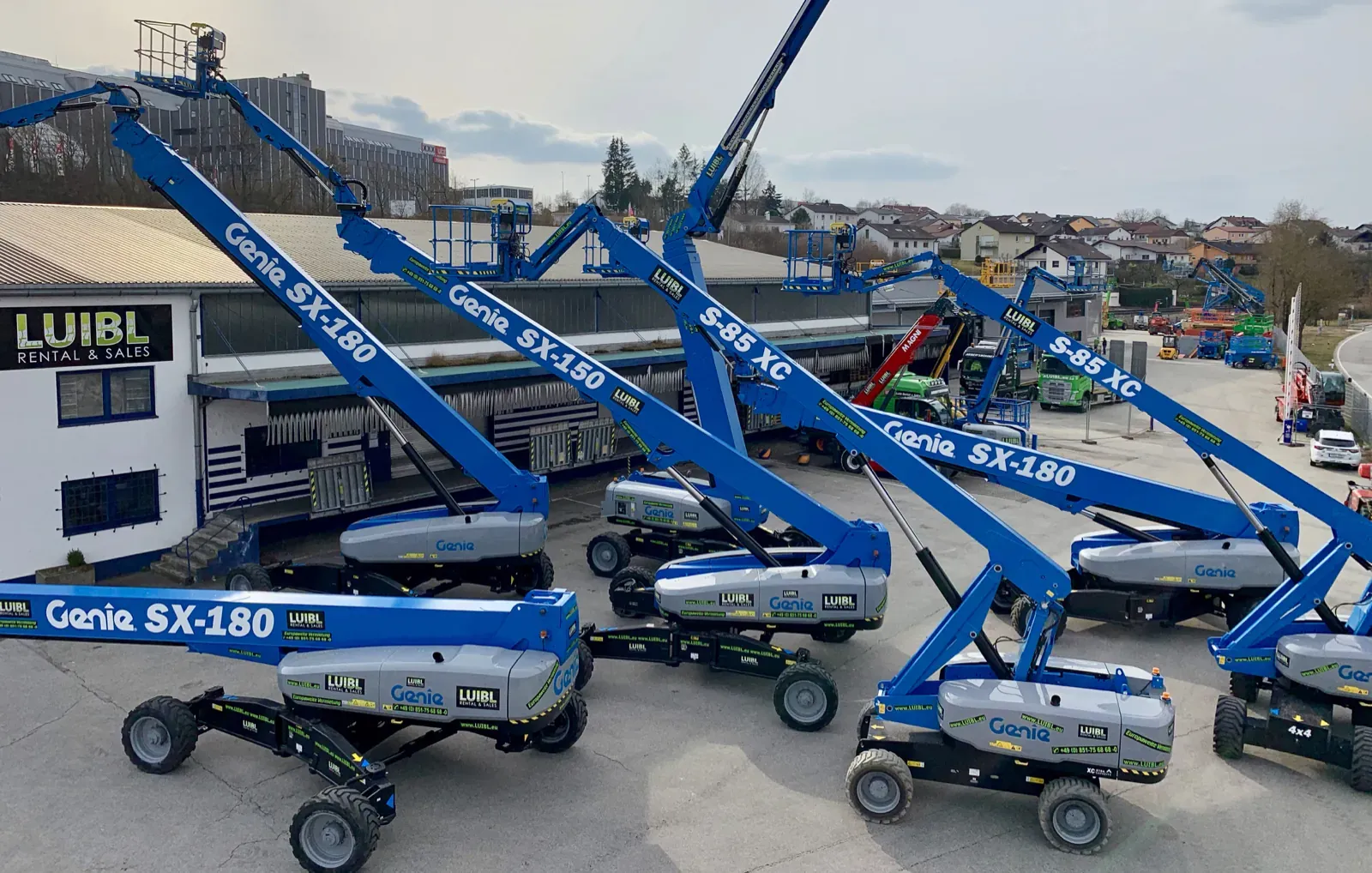
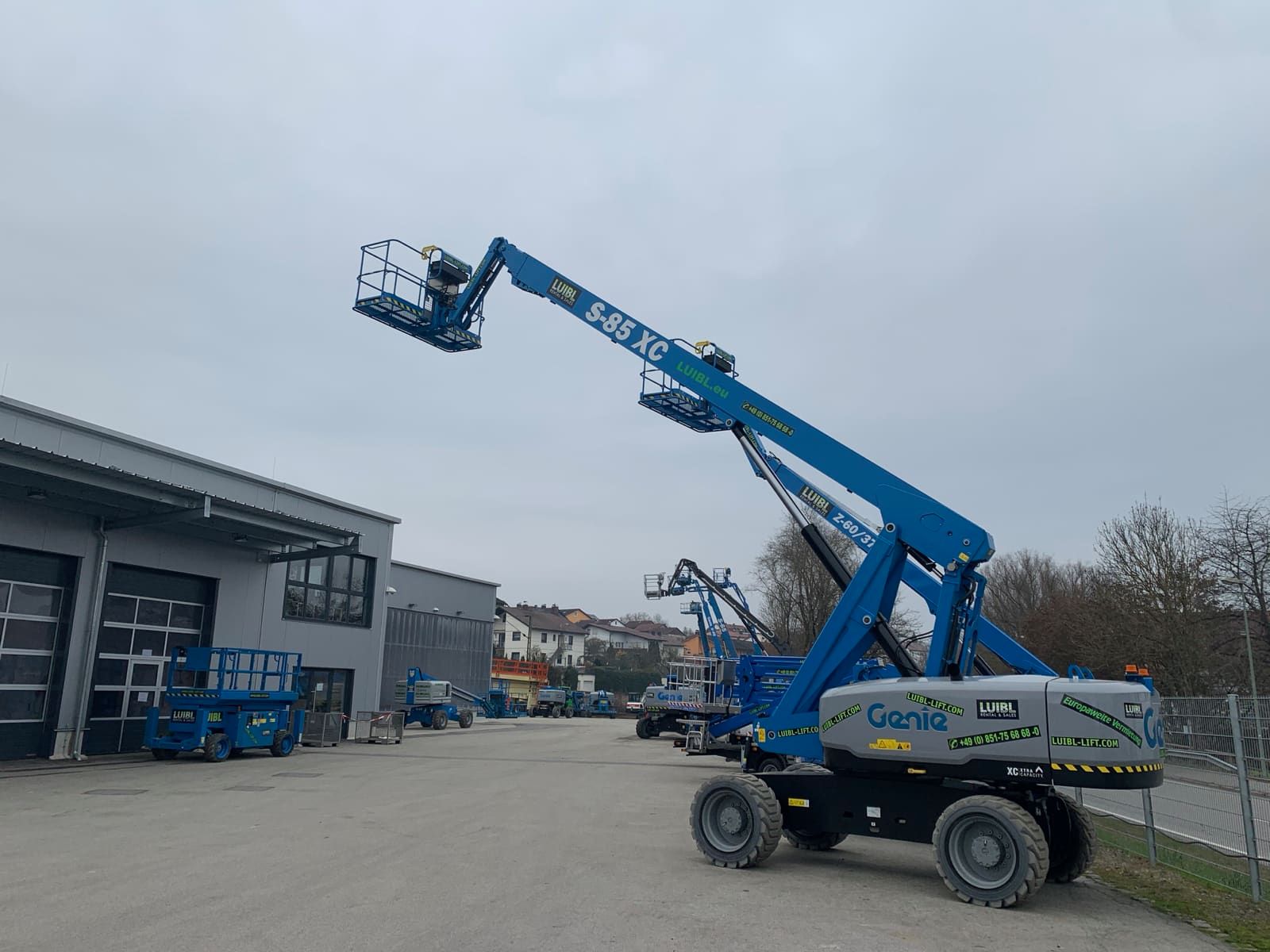
Stay up to date with the latest news from Luibl Rental & Sales. Here you will find general information as well as details of our current fleet and the latest additions to it.

FacebookInstagramLinkedin
Magni Teleskoplader mieten

Telehandlers: types, load capacity, duties and rental at a glance

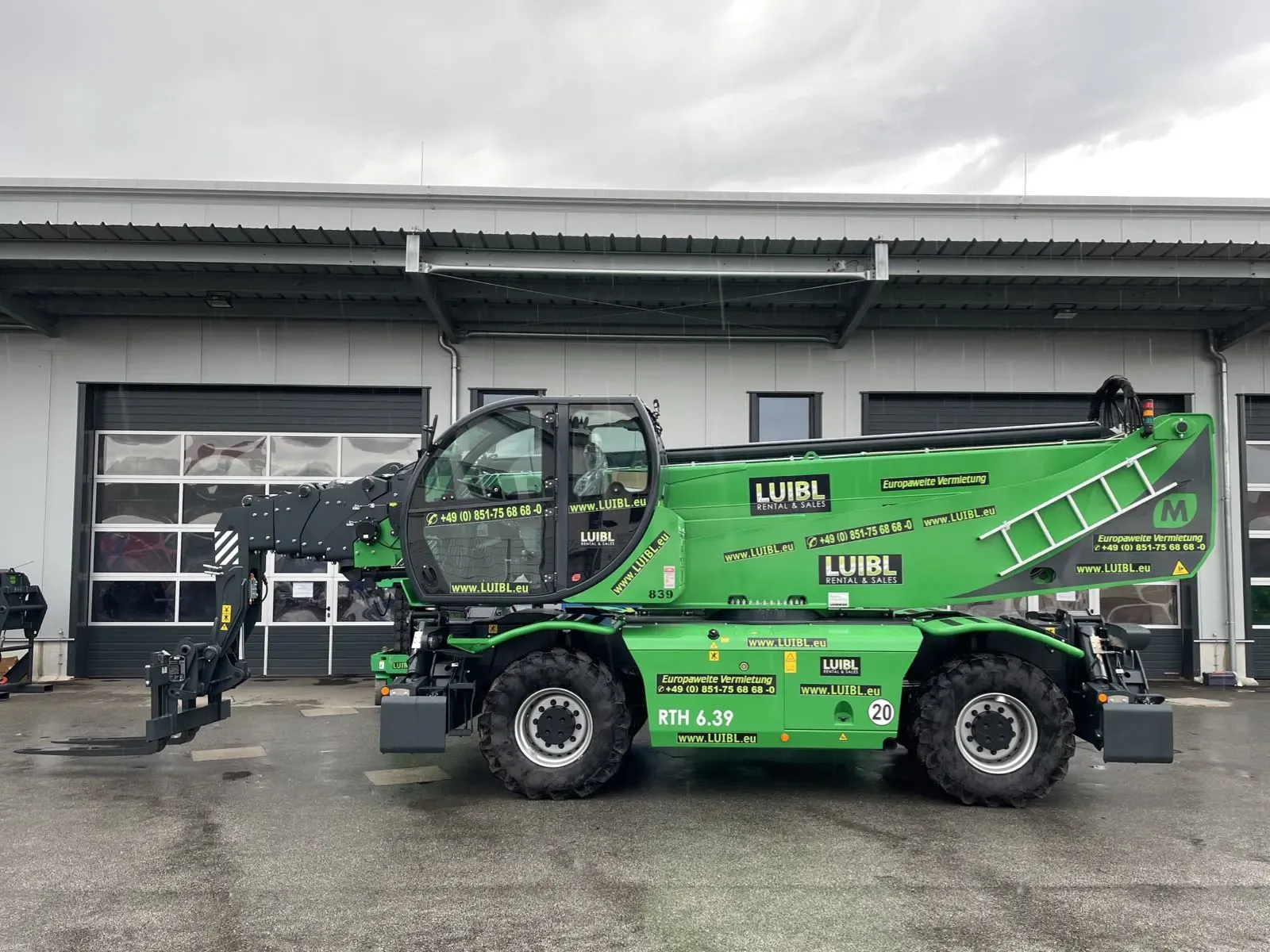
A telehandler is a rough-terrain lifting machine with an extendable telescopic boom. It lifts, stacks and places loads where a forklift can no longer reach and a crane would be too much effort. In the Luibl rental fleet, the machines range from 4.30 m to 38.90 m lift height and from 1.25 t to 25 t load capacity. That is why it is a standard machine on construction sites, in agriculture and in industry. The difficulty lies in the selection: Which type fits, how much load capacity remains at full outreach, what operator competence is required? This guide answers these questions at a glance and refers you to the relevant in-depth article for every detailed question.

Read more
Arbeitsbühne mieten bei LUIBL

Which aerial work platform for which job? The decision guide in five questions

Which aerial work platform suits your job is decided by **five questions in a fixed order**: How high? How far to the side? What ground and what access? Indoors or outdoors? How much load on the platform? If you answer them one after the other, each answer rules out types and you will reliably arrive at one of seven platform types — from the mast lift to the telescopic boom lift with 56.90 m working height. The choice is wider today than ever, and the types overlap considerably in height: a working height of 20 metres is reached by scissor lifts, articulating boom lifts, telescopic boom lifts, spider lifts and truck-mounted platforms alike. Height alone therefore almost never decides. This decision guide takes you through the five questions, presents a deployment matrix for typical tasks at the end and names the three most common wrong decisions. This refers to the mobile elevating work platform under STN EN 280, not the stationary vehicle lift in a garage. You will find all types you can rent from Luibl Rental on the page [Aerial work platform rental](https://www.luibl.eu/hebebuehne-mieten/).

Read more
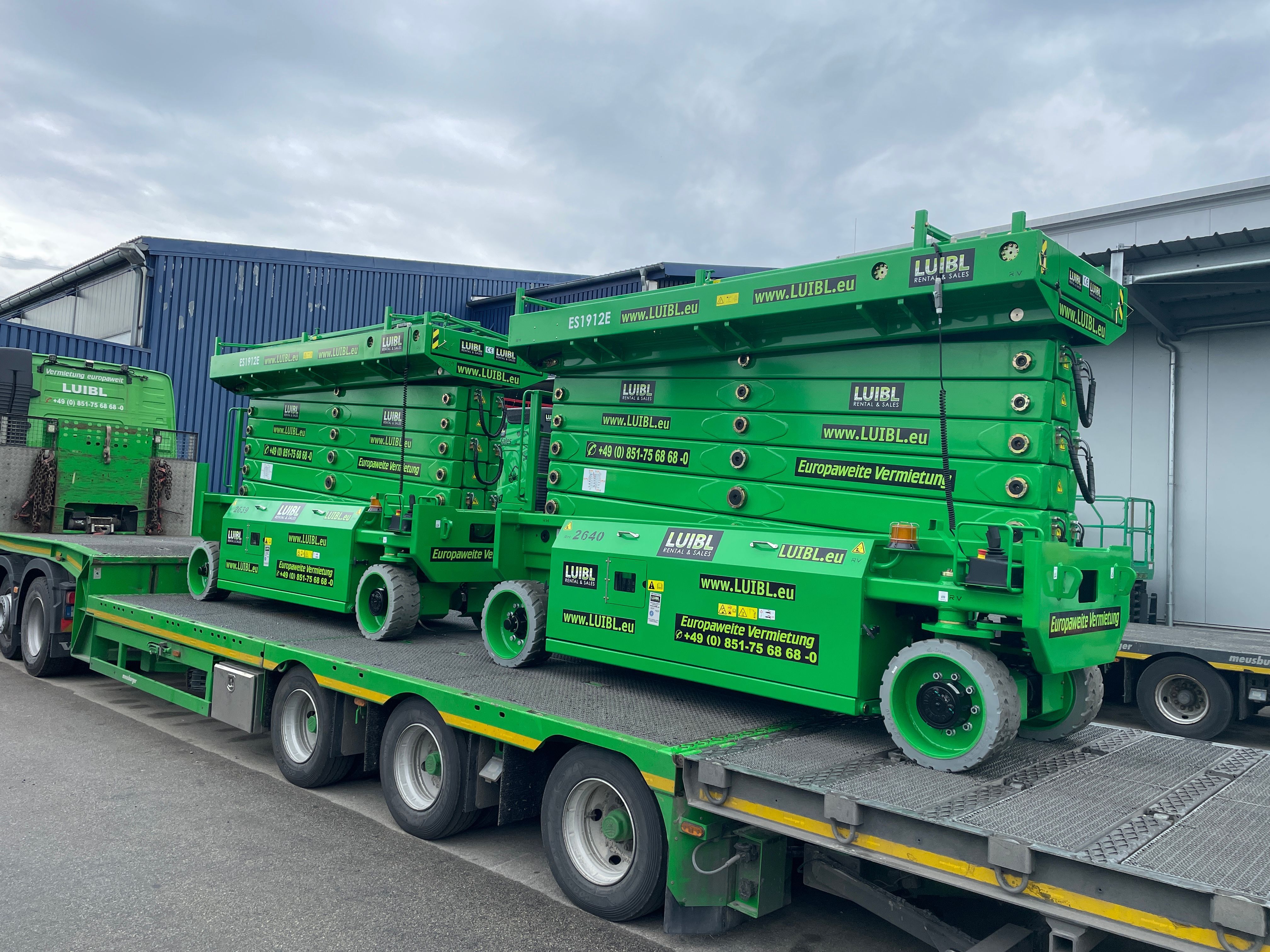
Grüne Scherenbühnen auf einem Tieflader

Rent or buy an aerial work platform? The decision by utilisation, costs and duties

Whether you should rent or buy an aerial work platform depends above all on **utilisation**: below around **150 days of use per year**, renting is usually more economical; from around **250 days of use**, buying can pay off. In between, three points tip the balance — how many different types you need, who organises inspections, tests and maintenance, and how much capital you want to tie up. Many companies eventually face the question: the rented aerial work platform was in use a lot this year and the rental invoices are adding up — would a machine of your own be cheaper? The honest answer depends on what costs arise besides the purchase price and whether the one machine you buy really covers all jobs. This guide shows the calculation, the owner's costs and the mixed models in between. Luibl knows both sides: Luibl Rental rents out aerial work platforms with delivery throughout Slovakia, and new and used machines are sold via [luibl.net](https://www.luibl.net/). You will find all rental machines on the page [Aerial work platform rental](https://www.luibl.eu/hebebuehne-mieten/).

Read more

Scissor lifts: types, heights and applications at a glance

The scissor lift is the workhorse among aerial work platforms: large platform, high load capacity, vertical lift – ideal wherever lifting is possible directly below or next to the work area. A scissor lift raises its platform vertically by means of an extending scissor stack. Unlike articulating boom lifts or mast lifts, it has **no outreach** – but it offers by far the largest working area and the highest load capacities in its class. Many models have an extendable platform deck that allows limited overreach (for example over a shelf or plinth). This guide explains the designs, helps you choose the right working height and names the limits at which another platform is the better choice. The data comes from the Luibl rental fleet, which includes scissor lifts with working heights from 6.30 m to 33 m and load capacities of up to 1,000 kg.

Read more

Diesel or electric aerial work platform: which suits your project?

**Electric indoors and on sensitive floors, diesel on rough terrain and for continuous outdoor operation.** The interesting cases are those in between: halls with an outdoor section, city centres with emission restrictions, multi-day jobs without charging facilities. This compact comparison classifies the drive types and introduces Bi-Energy as the third option.

Read more

Truck-mounted platform: use, driving licence and rental costs

A truck-mounted platform (also called a truck platform or cherry picker) is an [aerial work platform](https://www.luibl.eu/mieten/arbeitsbuehnen/) permanently mounted on a truck chassis. On site, the vehicle is stabilised on outriggers, then the articulated or telescopic boom extends the basket. It brings working height by road on its own wheels to wherever it is needed - without a low-loader. What makes the 3.5-tonne class special: it may be driven with a standard category B licence. In the Luibl rental fleet, this class reaches **16 to 22 metres of working height** with outreach **of up to 11 metres**. On heavier chassis, the range extends up to **57 metres** with outreach of up to 30 metres.

Read more

Telehandler or wheel loader: the practical comparison

The rule of thumb first: if you mainly **move and load bulk material**, choose the wheel loader. If you **lift, stack and need height**, choose the telehandler. It gets interesting in the grey zone in between - that is where breakout force, lift height and the question of whether one machine can do both jobs decide. This comparison comes from the rental provider, not the manufacturer: we recommend the wheel loader whenever it is the better choice. All designs, attachments and applications of the telehandler are explained in the [telehandler guide](https://www.luibl.eu/ratgeber/teleskoplader/).

Read more

How much does it cost to rent a telehandler? Prices per day and week

Depending on lift height, a fixed telehandler costs about **€150 to €280 per day** to rent, a roto telehandler about **€350 to €650 per day** — excluding VAT and transport, guide values from Luibl's rental business, as of 09/2026. With weekly and monthly rental, the daily rate drops significantly. This guide breaks down prices by machine class, explains all cost factors and works through three typical projects. Which design suits which task is explained in the [telehandler guide](https://www.luibl.eu/ratgeber/teleskoplader/) overview.

Read more

Which driving licence do you need for a telehandler?

These are two different things that are regularly mixed up. For **driving on public roads**, a driving licence under Act No. 8/2009 Coll. on road traffic is required — which category depends on the design speed and weight of the machine. For **operating on site**, no driving licence is needed, but the required operator competence and written authorisation by the employer. Anyone who mixes the two up will reach the wrong conclusions. This guide keeps them clearly apart. An overview of designs, attachments and all obligations during use is provided by the [telehandler guide](https://www.luibl.eu/ratgeber/teleskoplader/).

Read more

Telehandler operator competence: scope, costs, duration

Anyone who operates a telehandler at work - regardless of whether the machine is bought or rented. The employer may only appoint persons who have **the required operator competence in line with applicable Slovak safety rules**, are at least 18 years old and are physically and mentally fit. This guide explains objectively what the training covers, what it typically costs and how long it takes with external providers, and how it differs from the forklift operator licence and from a road driving licence. **Luibl does not offer training itself** - we rent out the machines and tell you what matters when it comes to qualifications. Which machine type requires which scope of training is shown in the overview in the [telehandler guide](https://www.luibl.eu/ratgeber/teleskoplader/).

Read more

Articulating boom lift or scissor lift: which platform for which job?

The two most common self-propelled aerial work platforms solve different tasks: the **scissor lift** raises a large area and load vertically, while the **articulating boom lift** takes a compact basket precisely around obstacles to the target. Choose the wrong one and you lose time - or never reach the work point at all. This comparison provides the decision logic from the practice of a rental company that has both types in its rental fleet.

Read more

Trailer-mounted platform: use, driving licence and limits

The trailer-mounted platform is the cheapest way to reach double-digit working heights: it is hitched to a normal towing vehicle and needs neither a truck nor a low-loader. In return, it works exclusively on outriggers and cannot travel at height. An overview of all designs from trailer-mounted to truck-mounted platforms can be found on the page [Lift rental](https://www.luibl.eu/hebebuehne-mieten/); the rental machines are listed under [Aerial work platform rental](https://www.luibl.eu/mieten/arbeitsbuehnen/). Technically, it is an aerial work platform on a car trailer chassis. On site, it is levelled on four outriggers; only then can the articulating or telescopic boom with the basket be extended. Common rental models reach **10 to 16 metres working height** with basket loads of around 200 kg and dead weights mostly below 2 tonnes, light enough for many towing vehicles. This guide answers the most frequent questions, above all about the driving licence, and shows when a different platform is the better choice.

Read more

Aerial work platform licence: who may operate an aerial work platform?

The term "aerial work platform licence" is widely used in everyday language - legally, there is no statutory driving licence for aerial work platforms. What does exist is the operator's duty to hold a written confirmation of verified expertise issued by a certified inspection technician (Section 17(3) Decree No. 508/2009 Coll.) and employer duties in line with applicable Slovak safety rules, without which nobody may put an aerial work platform into operation. Yes and no. There is no state-issued licence for aerial work platforms. What does exist is the **required operator competence** (written confirmation of verified expertise issued by a certified inspection technician under Section 17(3) Decree No. 508/2009 Coll.) and the **employer's duty to authorise the operator** in line with applicable Slovak safety rules: - The operator must demonstrate competence - by completing recognised training or an equivalent qualification - and show that they can operate the machine safely. - The employer must authorise the operator to use the machine; written form is recommended. - In addition, a **machine-specific briefing** is required before each new machine or after a longer break. What is commonly called an "aerial work platform licence" is the training certificate with which the operator demonstrates the required operator competence, or an equivalent qualification (e.g. the PAL Card from IPAF).

Read more

Aerial work platform rental: costs per day, week and month

Anyone looking into rental costs for aerial work platforms online often finds either no figures at all or deliberately distorted entry prices. This page provides real guideline ranges from the rental business – by platform type, working height and rental period, without obfuscation. Rental costs for aerial work platforms vary considerably by platform type and working height. As a guide: - **Small scissor lift (up to 10 m, electric):** approx. €80–150 per day - **Medium articulating boom lift (16–20 m):** approx. €200–320 per day - **Large telescopic boom lift (28–43 m):** approx. €380–650 per day - **Truck-mounted platform (20–35 m):** approx. €500–850 per day - **Spider lift (12–30 m):** approx. €300–550 per day - **Trailer-mounted platform (10–16 m):** approx. €100–200 per day *As of: August 2026. Guideline values from the Luibl rental business. Transport, insurance and accessories are not included in the daily prices.*

Read more

Aerial work platforms: all types, applications and selection criteria

Which aerial work platform for which task? The answer depends on working height, ground, access situation and space conditions — and is not always obvious. This guide explains all common platform types with their strengths and limitations, provides a decision matrix for typical application scenarios and shows when which drive type is the right choice. An aerial work platform is a motor-driven piece of work equipment with a work basket or platform that brings people and material to working height and holds them there. Unlike ladders or scaffolding, aerial work platforms are mobile machines that the operator can control from the work basket. The term covers all self-propelled and towed equipment for temporary work at height — scissor lifts, articulating boom lifts, telescopic boom lifts, truck-mounted platforms, spider lifts and trailer-mounted platforms. Synonyms: cherry picker, lifting platform, elevated work platform.

Read more

Who may carry out inspections? Competence explained

The question "Who may carry out the inspection?" has a clear legal answer - and considerable consequences in practice if it is answered wrongly. An inspection carried out by a person without the required competence is legally worthless: the inspection record is deemed not to have been issued and the work equipment is deemed uninspected. Inspections and tests must be carried out by a **competent person under Decree No. 508/2009 Coll.** This is a person with relevant vocational training, proven experience with the type of work equipment being inspected and recent professional activity. For cranes, which count as designated lifting equipment, the rules may additionally require an inspection by an **authorised organisation** (e.g. TUV).

Read more

Inspections and tests of aerial work platforms: when are they due? Overview

Operators who lose track of inspection intervals carry the full liability risk. Government Regulation No. 392/2006 Coll. (work equipment) and Decree No. 508/2009 Coll. on inspections and tests of technical equipment set clear obligations - depending on the work equipment, operating conditions and manufacturer specifications. This page lists the inspection requirements for all common machine types in one table - compact and ready to use. The following table shows the inspection requirements, the relevant legal basis and the competence of the inspector for each category of work equipment. Before applying it: the risk assessment and manufacturer specifications take precedence - they may require shorter intervals. | Work equipment | Inspection interval | Legal basis | Responsible inspector | | --- | --- | --- | --- | | Forklifts / industrial trucks | in line with applicable rules and the manufacturer's manual | occupational safety rules, Government Regulation No. 392/2006 Coll. | competent person in line with applicable rules | | Aerial work platforms | inspection once a year, test every two years (Annex 7), unless the manufacturer specifies shorter intervals | Decree No. 508/2009 Coll., Government Regulation No. 392/2006 Coll. | certified inspection technician | | Cranes (inspection) | in line with Decree No. 508/2009 Coll.; for mobile cranes once a year (Annex 7) | Decree No. 508/2009 Coll., Government Regulation No. 392/2006 Coll. | competent person in line with applicable rules | | Cranes (test) | depending on crane type; for mobile cranes every two years (Annex 7) | Decree No. 508/2009 Coll. | authorised person in line with applicable rules | | Construction machinery (excavators, wheel loaders, dumpers) | in line with applicable rules and the manufacturer's manual | Government Regulation No. 392/2006 Coll., occupational safety rules | competent person in line with applicable rules | | Telehandlers | in line with applicable rules and the manufacturer's manual | Government Regulation No. 392/2006 Coll. | competent person in line with applicable rules | | Trailers (commercial) | in line with applicable rules | occupational safety rules, Act No. 8/2009 Coll. on road traffic | competent person / vehicle workshop | | Cars / company vehicles (commercial) | in line with applicable rules | occupational safety rules | competent person / vehicle workshop | **All figures are guide values (minimum requirements). The risk assessment and manufacturer specifications may differ.**

Read more

Inspections and tests of aerial work platforms: procedure and checkpoints

Aerial work platforms - whether scissor lift, articulating boom lift, truck-mounted platform, spider lift or trailer-mounted platform - are work equipment for access at height and are subject to checks under Government Regulation No. 392/2006 Coll. (work equipment). As designated lifting equipment, they are subject to inspections and tests of technical equipment (Decree No. 508/2009 Coll.) - regardless of whether they are owned or rented machines. This guide explains what operators of aerial work platforms specifically need to have inspected, which points are checked and how the daily pre-use check differs from the periodic inspection and test. The inspection obligation for aerial work platforms derives from several regulations: - **Government Regulation No. 392/2006 Coll.:** operators must keep work equipment in proper condition and have it inspected regularly - **Decree No. 508/2009 Coll.:** inspections and tests of technical equipment - defines designated lifting equipment and the requirements for its inspection - **EN 280:** European standard for aerial work platforms - safety requirements and design specifications on which the inspections are based. [EN 280 in detail →](https://www.luibl.eu/ratgeber/din-en-280-hubarbeitsbuehnen/) - **Work at height:** when working with personal fall protection equipment, additional requirements for anchor points apply under Government Regulation No. 147/2013 Coll.

Read more

Crane inspections: Decree No. 508/2009 Coll. in practice

Inspections and tests of cranes are among the most demanding inspection obligations in commercial operations – and, if neglected, among the most expensive in the event of damage. As designated lifting equipment, cranes are subject to special inspection requirements that go beyond the general operator obligation under Government Regulation No. 392/2006 Coll. (work equipment): in addition to regular inspections, tests carried out by authorised bodies are required depending on the type of crane. **Short definition for featured snippet:** Inspections and tests of cranes are prescribed safety checks under Decree No. 508/2009 Coll. and Government Regulation No. 392/2006 Coll. Every crane must be checked regularly by a competent person; the intervals are set by the applicable regulations. Certain types of crane also require tests carried out by authorised bodies. The operator is responsible for ensuring the inspections.

Read more

Inspections of construction machinery: what applies to excavators and co.

Excavators, wheel loaders, tracked machines and dumpers are found on almost every site - and all of them are subject to statutory inspection requirements. Inspecting construction machinery is not a voluntary service but a binding requirement under Government Regulation No. 392/2006 Coll. (work equipment) and occupational safety rules (Act No. 124/2006 Coll.). Anyone who neglects deadlines or documentation may be held liable - including for damage to third parties. This guide explains the duties of site operators and fleet managers and provides an overview of deadlines, inspection scope and documentation requirements. The obligation to inspect construction machinery arises from **Government Regulation No. 392/2006 Coll. (work equipment)** in conjunction with Act No. 124/2006 Coll. on occupational safety and health. For technical equipment, inspections and tests of technical equipment apply (Decree No. 508/2009 Coll.). Basis: - **Government Regulation No. 392/2006 Coll.:** operators must keep work equipment in proper condition and have it inspected regularly for safe operation - **Occupational safety rules** (depending on machine type): specify the inspection scope and the inspector's qualification - **STN EN standards** and manufacturer requirements supplement the statutory minimum requirements

Read more

Forklift inspections: intervals, costs and scope

Forklift operators must ensure that their trucks are inspected regularly. The requirements are set out in the regulations — but questions keep arising in practice: How often is an inspection due? What exactly is checked? And what does it cost? This guide answers the key questions about forklift inspections and explains what applies to rental forklifts. Yes. The **occupational safety rules (Act No. 124/2006 Coll.)** and **Government Regulation No. 392/2006 Coll.** (work equipment) require operators to keep forklifts and other industrial trucks in a safe condition and to have them inspected regularly by a competent person; technical equipment is subject to **inspections and tests of technical equipment (Decree No. 508/2009 Coll.)**. A forklift without a valid inspection must not be used — the consequences range from operational interruptions to the loss of insurance cover in the event of occupational accidents. The short answer: every forklift used commercially must regularly undergo a full inspection in line with applicable Slovak safety rules.

Read more

Equipment inspections and tests: duties, intervals and process explained simply

Employers and operators of machines, vehicles and work equipment have a clear legal obligation: regular inspections and tests of technical equipment are not a recommendation but a binding requirement of Act No. 124/2006 Coll. on occupational safety and health, Government Regulation No. 392/2006 Coll. (work equipment) and Decree No. 508/2009 Coll. Anyone who neglects them risks fines, interruptions to operations and, in the event of damage, problems with insurance cover. This guide explains the duties of businesses and operators, how inspection intervals are determined for each type of work equipment and how to organise inspections cost-effectively — including the practical question of what applies to rental machines. In Germany these checks are called 'UVV-Pruefung'. In Slovakia they are referred to as inspections and tests of technical equipment under Decree No. 508/2009 Coll. — in substance these are mandatory safety checks of work equipment. **Legal basis at a glance:** **Act No. 124/2006 Coll. on occupational safety and health** forms the overarching legal framework: operators must keep work equipment in a safe condition and have it checked regularly. Related regulations specify this in more detail: * **Act No. 124/2006 Coll.** – general employer duties in occupational safety and health * **Government Regulation No. 392/2006 Coll.** – minimum safety requirements for work equipment * **Decree No. 508/2009 Coll.** – inspections and tests of technical equipment, including cranes and aerial work platforms * **Government Regulation No. 147/2013 Coll.** – work at height * **Act No. 8/2009 Coll.** – vehicles in road traffic

Read more

Forklift licence in Passau: courses and local providers

Anyone wishing to obtain a forklift operator licence in Passau or the Lower Bavaria region has various options: regional training providers, chamber courses, supra-regional certification bodies with branches in the region and in-house courses where suitable infrastructure is available. Passau is conveniently located on the border with Austria and Czechia. This affects the range of courses on offer: in addition to German providers, there are also courses near the border – however, Austrian and Czech course providers do not necessarily meet the German DGUV standard. For authorisation in German companies, DGUV-compliant training is a prerequisite. **Important:** Luibl Rental does not offer forklift licence courses itself. As a forklift rental company, we know our customers' qualification needs from practice and therefore give an honest overview of the regional range of courses.

Read more

How long does a forklift licence course take?

A forklift operator licence course takes **between one and five days** - depending on the course format chosen and prior experience. The most common question, "Can it be done in one day?", cannot be answered across the board: it depends on the individual case.

Read more

Lost your forklift operator licence - what now?

If you have lost your forklift operator licence, apply for the replacement document directly from **the organisation that carried out the original training and issued the document**. A new examination is generally not required.

Read more

Getting a forklift operator licence: process, providers and fast-track course

Anyone wanting to get a forklift operator licence usually goes through the same structured process, regardless of whether the course is taken at TUV, Dekra, a manufacturer academy or a regional training provider: **Step 1 - Check the requirements** Minimum age 18, physical fitness (sight and hearing), where applicable a medical assessment by an occupational health physician. Anyone who already has experience with industrial trucks checks in advance whether a one-day course is an option. **Step 2 - Choose provider and course format** Depending on prior knowledge, time frame and budget, decide between a standard course (2 days), a one-day course (1 day, for experienced operators) and in-house training (group). Weigh up supra-regional providers against regional ones. **Step 3 - Register and submit documents** Register directly with the provider, usually online or by phone. Documents required: identity card, where applicable a medical fitness certificate, where applicable the employer's cost coverage declaration or proof of labour office support. **Step 4 - Complete the course** Theoretical and practical training for the forklift operator licence (Act No. 124/2006 Coll., Decree No. 356/2007 Coll.). Concludes with a two-part exam (theory + practice). **Step 5 - Authorisation in the company** After passing the exam, the employer authorises the employee in writing to operate the truck. Without this formal authorisation, the employee should not operate the forklift even with a licence.

Read more

Forklift operator licence: exam questions with answers

The theory exam for the forklift operator licence is governed by **Act No. 124/2006 Coll. and Decree No. 356/2007 Coll.** It usually comprises **25 to 30 questions** in multiple-choice format. **Key facts about the theory exam:** * Number of questions: 25-30 (depending on provider) * Time limit: 45-60 minutes * Pass mark: 70-80 % correct answers (depending on provider) * Format: multiple choice, 1 or 2 correct answers per question **The provider decides what passes:** There is no uniform question catalogue throughout Slovakia. The exam questions are based on the topics of operator training under occupational safety rules, but wording and selection vary by provider and region. This means: practising by topic is the safest way to prepare.

Read more

How much does a forklift operator licence cost?

A forklift operator licence costs between **150 and 600 euros** per person with external providers, depending on course format, provider and region. One-day courses for people with prior experience are at the lower end of the range; multi-day standard courses for beginners are more likely around 300-500 euros. In-house training for larger groups can be cheaper depending on the number of participants. _Price research as of August 2026, external providers (Dekra, TUV, authorised training providers, regional training centres)._

Read more

Forklift licence: the complete guide

The term "forklift licence" is everywhere in day-to-day operations - the correct name, however, is **forklift operator licence**, which certifies operator competence. This clarification is not just about wording: anyone who wants to make a good impression in job adverts or in dealings with authorities should know the official name. The legal basis is **Act No. 124/2006 Coll. on occupational safety and health** and **Government Regulation No. 392/2006 Coll. (work equipment)**, which set out the employer's duties when operating work equipment. Forklift drivers need a forklift operator licence (Decree No. 356/2007 Coll.), issued by an authorised training provider; authorisation is given by the employer. The licence certifies that the holder has completed recognised training, passed the associated examination and thus met the minimum qualification for operating a forklift commercially. Without this proof, operating a forklift in a work environment is prohibited - regardless of whether the machine is owned or rented. **Please note:** the licence applies exclusively to operation on company premises and private traffic areas. As soon as a forklift drives on public roads, the requirements of Act No. 8/2009 Coll. on road traffic also apply.

Read more
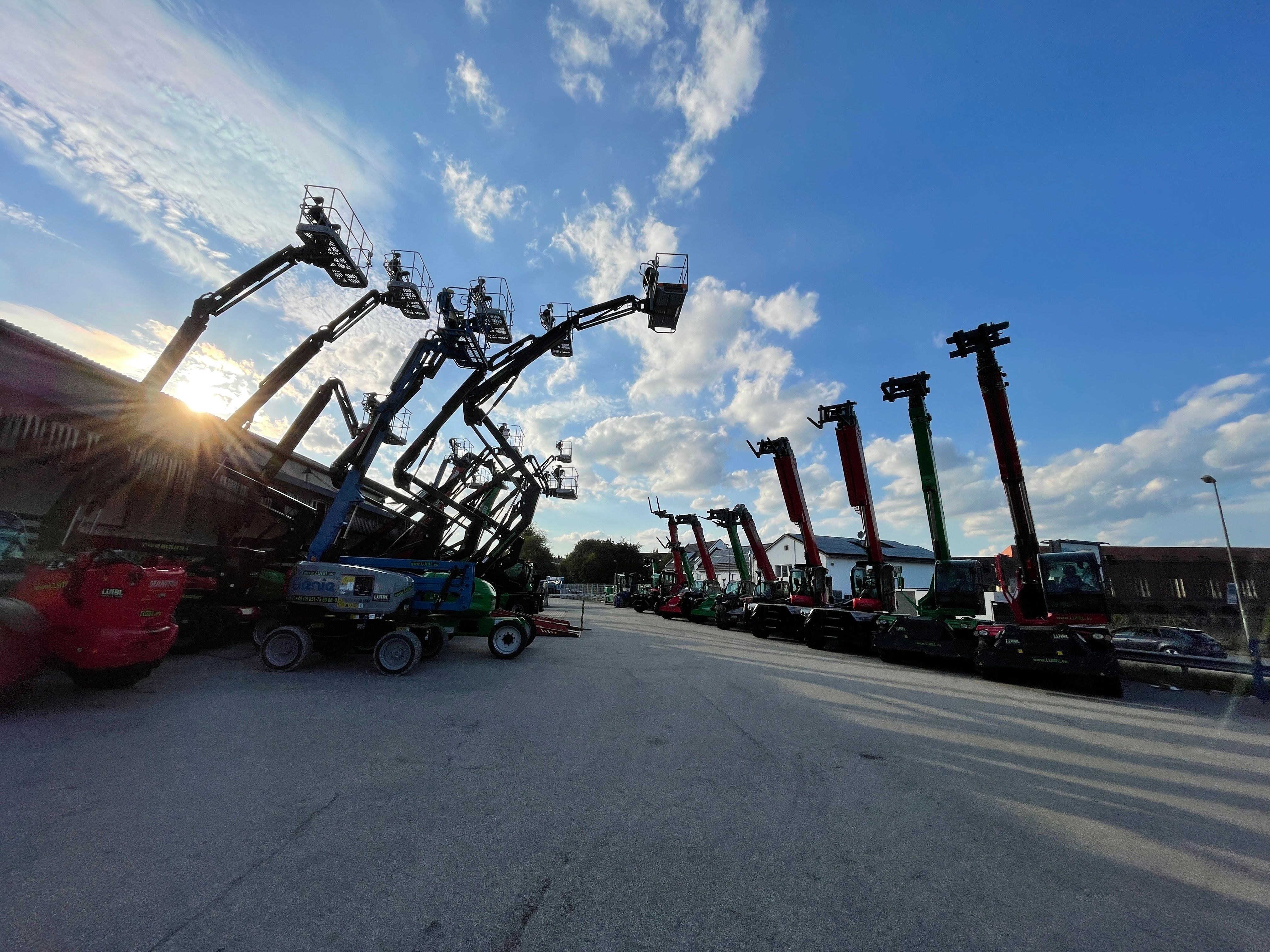
Teleskopbühnen im Gegenlicht auf dem Betriebsgelände

At what wind speed does outdoor use of aerial work platforms become a risk?

A sudden gust of wind at a height of 25 metres can tip over an aerial work platform, even if the rated load of the platform has not been exceeded. Wind load acts in addition to the weight of the person, tools and material and fundamentally changes the stability of the machine. For site managers using scissor lifts, articulating boom lifts or truck-mounted platforms outdoors, the question of the permissible wind speed is therefore not a minor matter but one of the central safety decisions before every outdoor job.

Read more
Logos der Hersteller Magni, Manitou und Merlo

Magni, Manitou or Merlo? The roto telehandler brand comparison

Once you have decided on a roto telehandler, the next question arises: which of the three major brands suits your project? Magni, Manitou and Merlo all build rotating [telehandlers](https://www.luibl.eu/mieten/teleskoplader/) with comparable key data – lift heights of almost 40 metres, load capacities up to 8 tonnes – but differ significantly in control philosophy, chassis and cab concept. This comparison classifies the three manufacturers along the criteria that actually determine satisfaction on site in practice. How the types differ and which obligations apply during use is explained in the [telehandler guide](https://www.luibl.eu/ratgeber/teleskoplader/).

Read more
Blaue Teleskopbühne an einem Industriegebäude

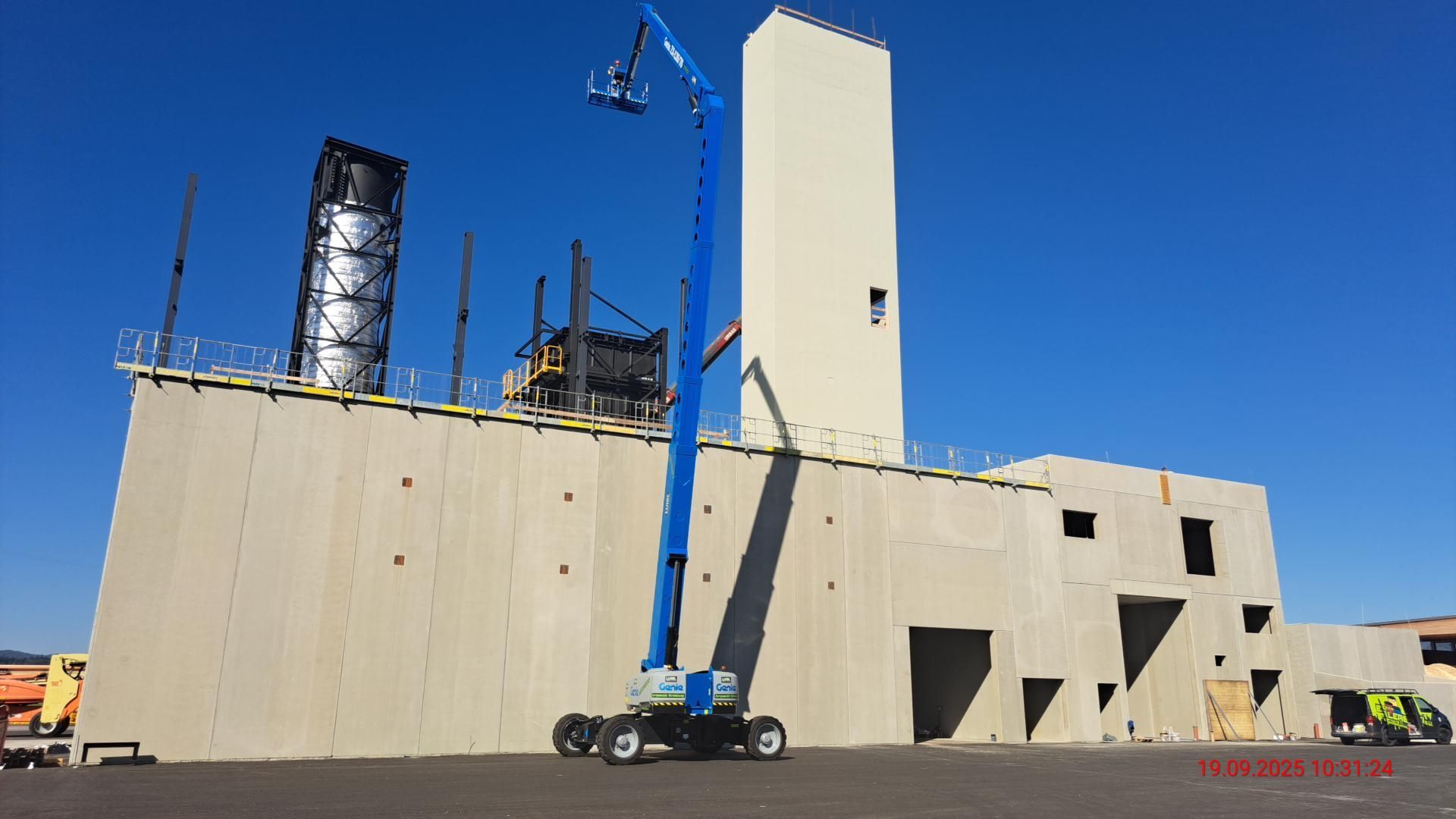
Risk assessment for aerial work platforms: the guide for site managers

Before the first scissor lift or articulating boom lift is set up on a site, a document must exist that many companies underestimate: the risk assessment. It is not a formality - under Act No. 124/2006 Coll. on occupational safety and health and Government Regulation No. 392/2006 Coll. (work equipment), it is the legal prerequisite for work equipment such as an aerial work platform or a telehandler to be used at all. Anyone who carries it out incorrectly or not at all is personally liable in the event of damage - regardless of whether the rented machine itself was technically flawless. For site managers and safety officers, this raises a question before every enquiry to Luibl Rental that starts long before choosing the machine: what hazards does the specific site involve, and which measures must be in place before the operator first climbs aboard? This guide takes you through the process step by step and shows how the assessment affects the choice of the right access equipment.

Read more
Hochregallager mit Paletten in einer Logistikhalle

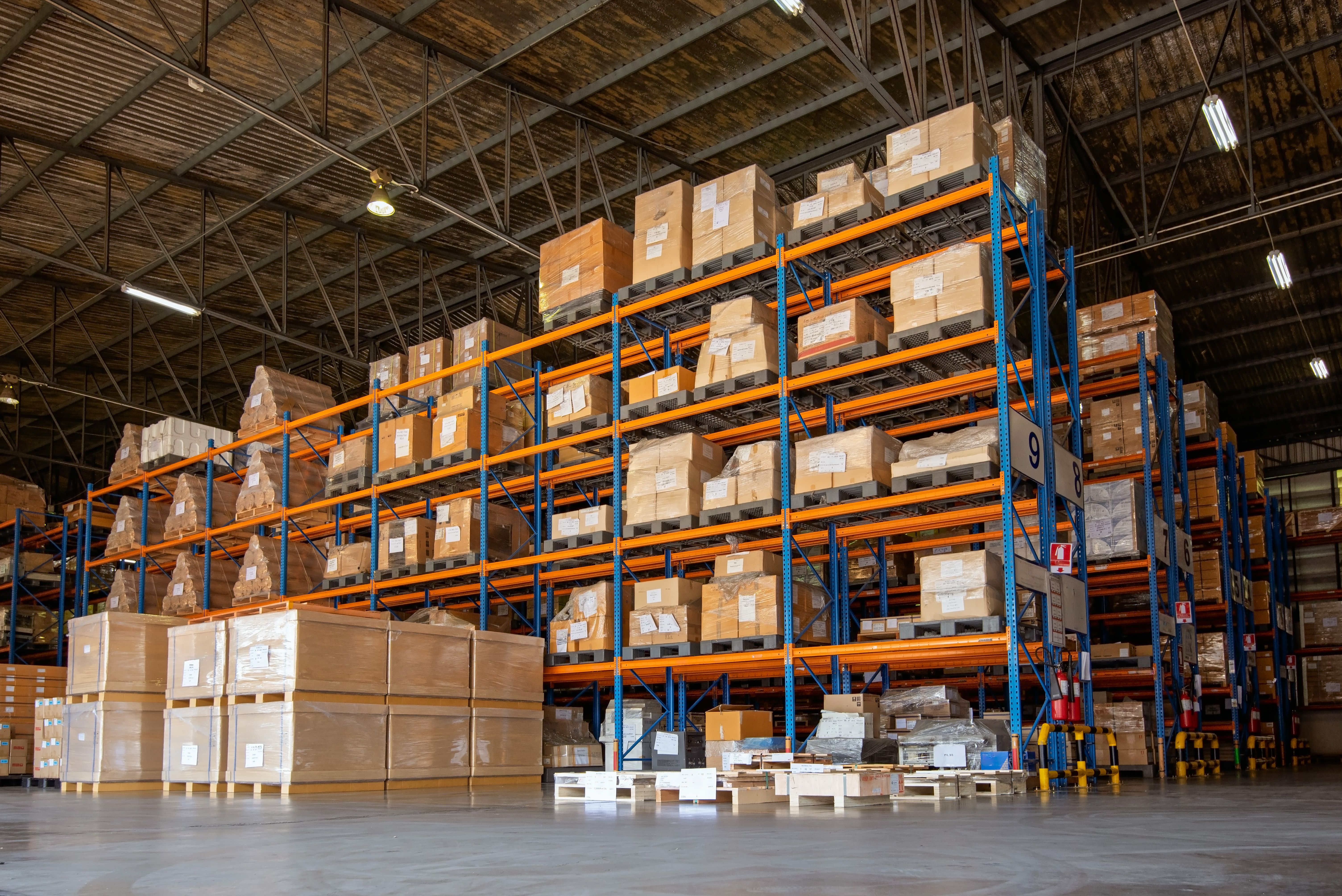
Logistics centres and high-bay warehouses: which aerial work platform for maintenance?

A defective sprinkler pipe on the top rack level, the annual stocktake at a height of 12 metres, a light fitting hanging right above the narrowest aisle. Maintenance work in a high-bay warehouse has one common problem: the racks are high, the aisles are narrow, and warehouse operations should continue as normally as possible in the meantime. Not every aerial work platform fits through these aisles – and not every one reaches high enough. This article explains which platform suits which situation in a high-bay warehouse and what to consider during planning.

Read more
Manitou 100 VJR Senkrechtarbeitsbühne in einer Halle

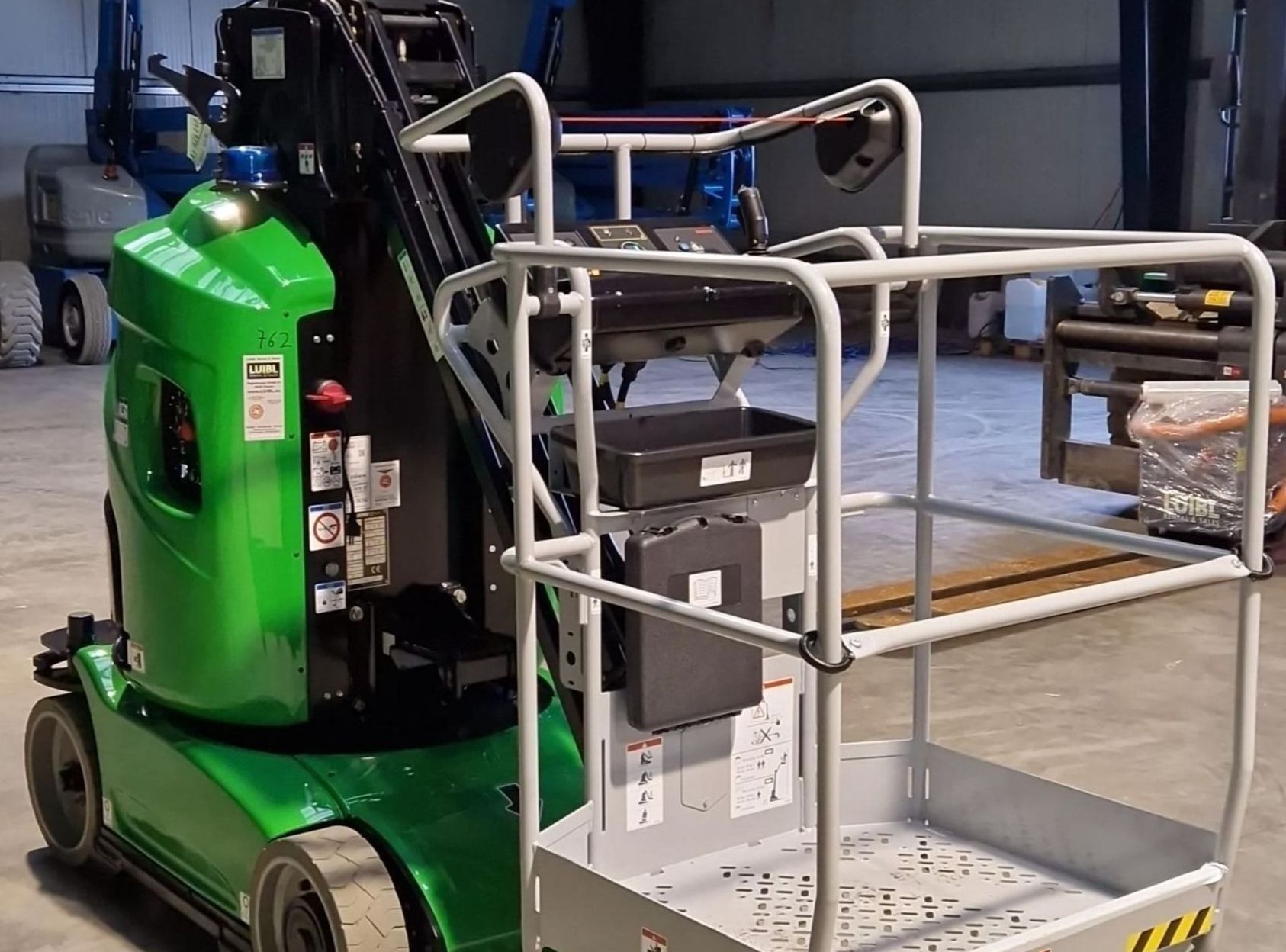
Mobile scaffold towers: technology, use and selection at a glance

For many jobs at height, the mobile scaffold tower is the first choice - because it can be erected, moved and dismantled quickly. But depending on the project, there are clear limits: heavy loads, outdoor terrain, wet floors or very large working heights call for other solutions. This guide explains what a mobile scaffold tower can do, where it reaches its limits and which alternatives are regularly the better choice in professional use.

Read more

Vacuum lifters: technology, use and selection at a glance

If you need to move heavy glass panes, stone slabs or metal panels without damage, chains, slings and hooks quickly reach their limits. Vacuum lifters solve this problem - they grip the load across its surface without damaging the edges and transfer the force evenly over the entire surface. This guide explains how they work, which types exist and what you need to look out for when choosing one.

Read more
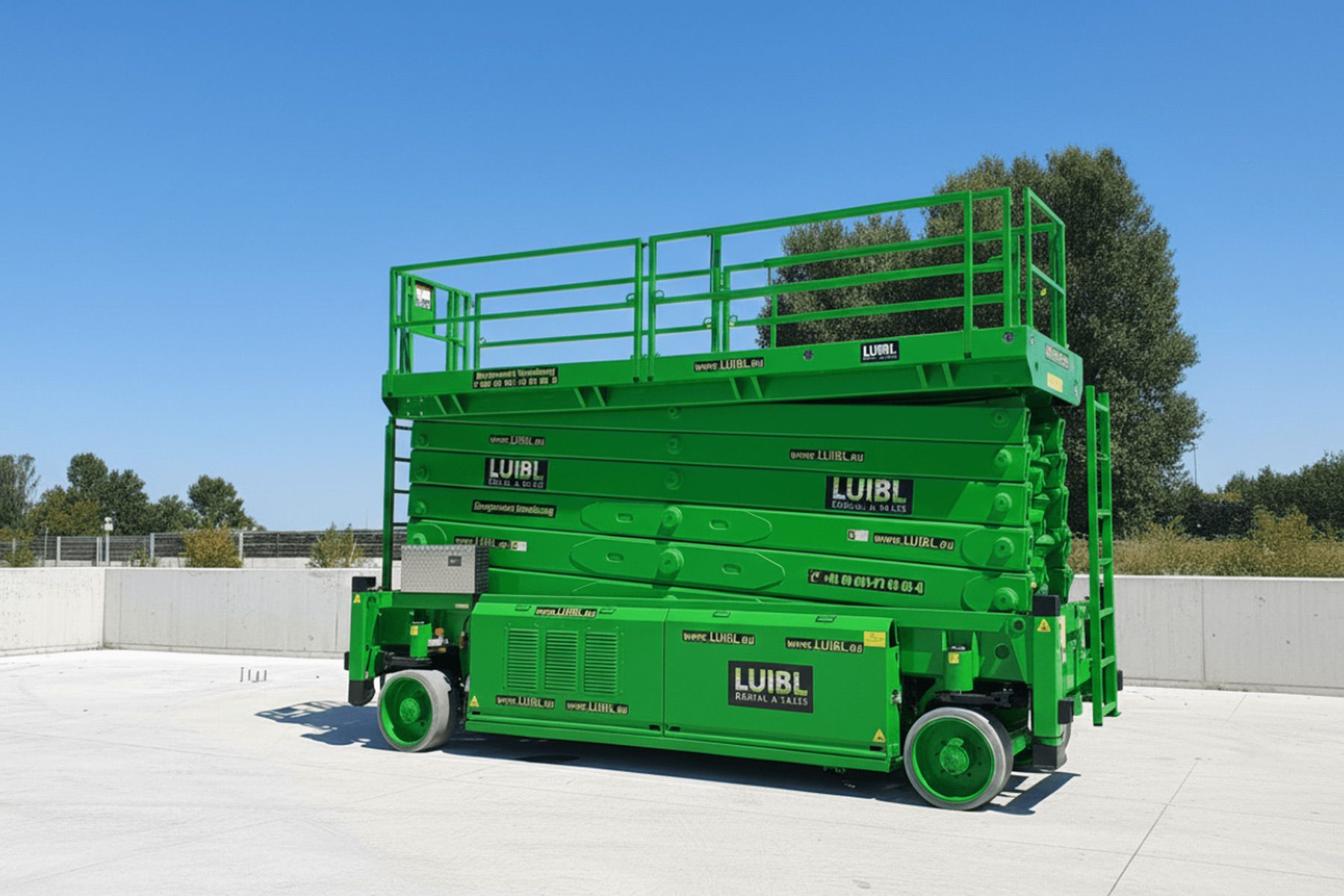
33m Elektro Scherenbühne

Aerial work platforms in film, event and trade fair productions - what organisers need to know

Rigging a concert stage at a height of 8 metres, setting up camera positions for a TV production, fitting trade fair stands with ceiling lighting - behind each of these set-ups there is usually an aerial work platform. And that is exactly where the problems often begin: events have tight time windows, narrow halls and zero tolerance for breakdowns. Anyone who orders the wrong machine or starts planning too late delays the entire set-up. This article shows which aerial work platforms are suitable for event productions, what matters when choosing one - and what rental companies like Luibl need to deliver so that set-up and dismantling really run smoothly.

Read more
Blaue Raupen-Arbeitsbühne mit Arbeitskorb

Spider lift rental - maximum reach on difficult ground

[Spider lifts](https://www.luibl.eu/mieten/arbeitsbuehnen/kettenarbeitsbuehnen/) - also called tracked aerial work platforms - are the right choice where wheels fail: on rough terrain, sensitive floors and in confined indoor areas. Luibl rents spider lifts from leading manufacturers such as CTE, Teupen, Hinowa and Leguan with working heights from 13 to 40 metres - with delivery throughout Slovakia by our own low-loaders.

Read more
Grüner Radlader vor einer Halle

Operating a wheel loader: technology, controls and licences at a glance

A [wheel loader](https://www.luibl.eu/mieten/baumaschinen/radlader/) is a self-propelled construction machine with wheel drive and a front lifting attachment – usually fitted with a bucket. Unlike a crawler excavator, which digs, a wheel loader is designed primarily for scooping, transporting and loading: sand, gravel, crushed stone, rubble, snow, biomass. The key design feature is **articulated steering**: wheel loaders do not steer via the front axle but bend the entire frame in the middle. This allows a tight turning circle despite a wide track – crucial on sites, in yards and material depots. Anyone experiencing this for the first time has to rethink: reversing works differently here than in a car.

Read more
Gelber Minibagger auf einer Baustelle

Mini excavator rental: what you need to know before renting

For digging in confined spaces, the [mini excavator](https://www.luibl.eu/mieten/baumaschinen/bagger/) is the workhorse of choice. Whether a utility trench in the backyard, drainage on company premises or excavation for a foundation, the compact class handles jobs for which a large crawler excavator would simply be too unwieldy. Anyone who only has such work occasionally is better off renting than buying: no capital tied up, no maintenance responsibility, no storage space needed. This guide shows what really matters when renting a mini excavator.

Read more
Gelbe Senkrechtarbeitsbühnen Haulotte Star 10

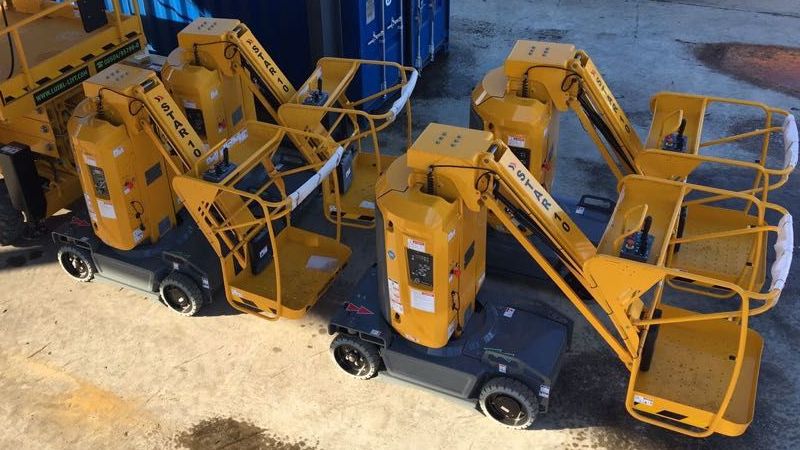
Roof work with a mast lift - planning, safety, procedures

Anyone planning roof work usually thinks straight away of scaffolding or a large articulating boom lift. Many are surprised that the compact mast lift can also be a serious option. Especially on flat industrial roofs, hall roofs or roof structures on paved ground, the mast lift offers real advantages: it is quickly ready for use, fits through gates and entrances and can be manoeuvred in confined spaces. What you need to consider during planning, which conditions must be met and when other machines are the better choice - this article shows you.

Read more
Grüne Scherenbühnen auf einem Tieflader

Aerial work platforms for church renovation - requirements, machine types and practical examples

Anyone planning to renovate a church soon realises that this is no ordinary construction project. Between listed facades, narrow churchyards, delicate natural stone floors and towers that easily rise 40 to 50 metres, requirements arise that normal sites do not have. Choosing the right aerial work platform for church renovation often decides whether a project runs smoothly or whether damage occurs that costs more than the renovation itself. In this article we show which machine types are suitable for which areas of a church, what special requirements exist - and what to consider when planning the rental.

Read more
Arbeitsbühne mieten bei LUIBL

Refurbishing a hall from the inside: which aerial work platform suits ceiling heights below 6 metres?

Anyone refurbishing an industrial hall from the inside often faces the same problem: the ceiling is too low for large aerial work platforms but too high for safe work from a ladder. Between 3 and 6 metres of room height lies a zone in which the wrong choice of equipment costs expensive time - or, in the worst case, the platform simply does not fit through the door. This comparison shows which aerial work platform is right for which ceiling height.

Read more
Grüner Teleskoplader am Fuß einer Windkraftanlage

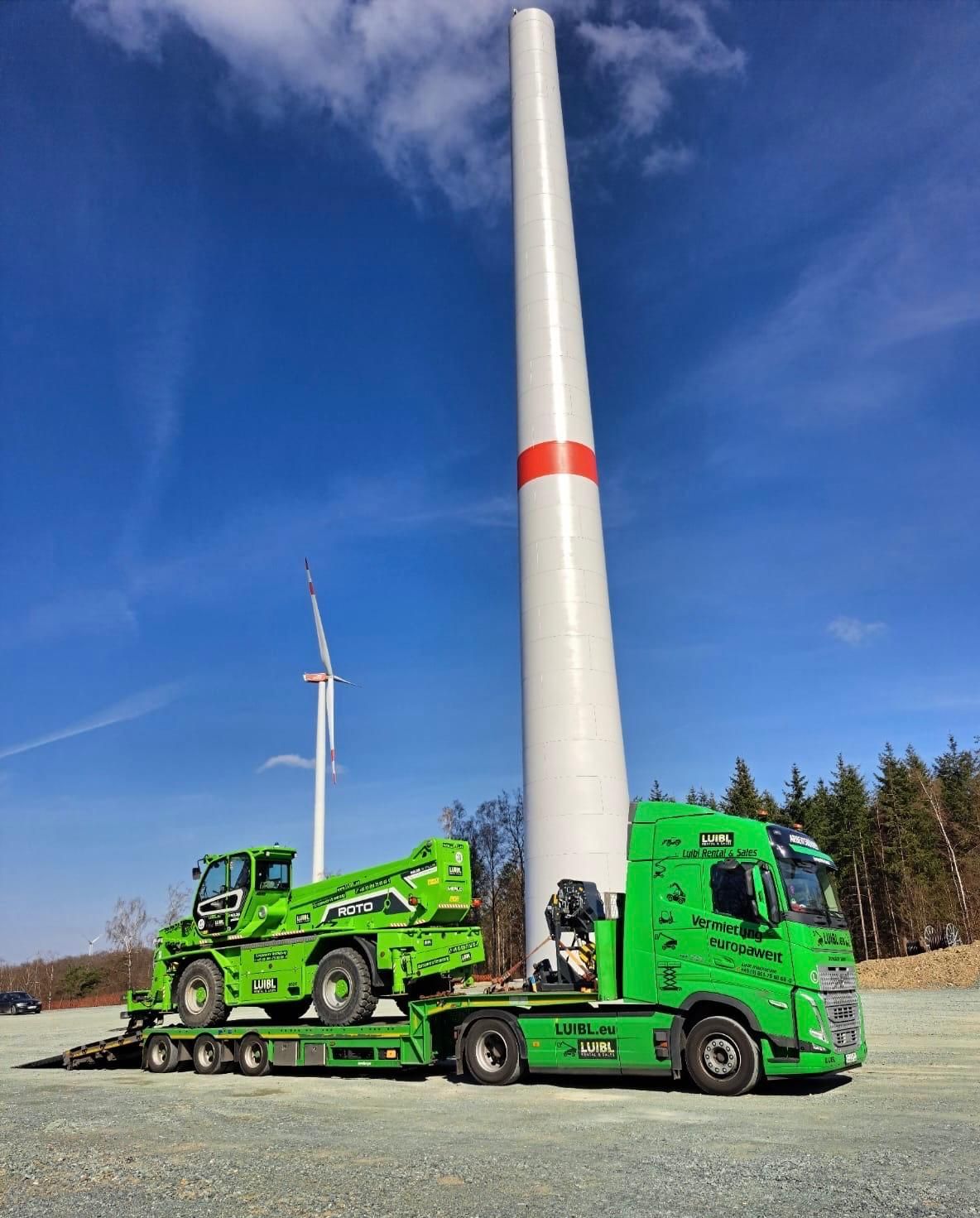
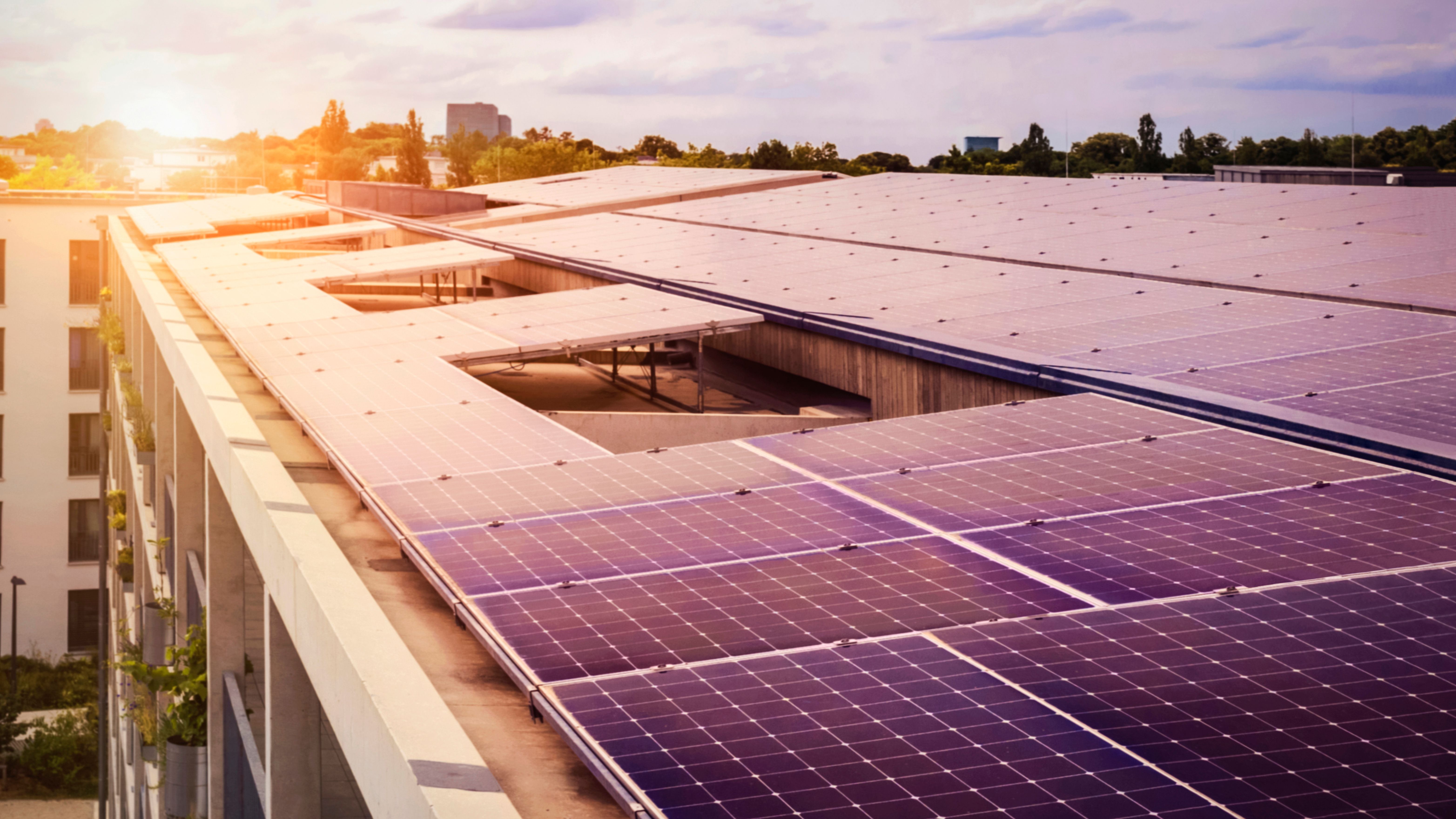
Renewable energy boom 2026: which access equipment for wind, PV and biomass?

More than 60 percent of Germany's electricity comes from renewable sources in 2026. Wind and photovoltaics are growing at record pace – and with them the need for installation, maintenance and inspection. All of this requires one basic prerequisite: safe access at height. But which equipment is the right choice for which type of installation?

Read more
Grüner Merlo Teleskoplader mit Palettengabel

Telehandlers in halls: choosing the right load capacity and clearance height

An industrial hall with 7.5 metres of ceiling height, 450 square metres of floor space and tight storage aisles only 3.2 metres wide - and you regularly need to store components weighing 3.5 tonnes at a height of 5.2 metres. A standard counterbalance forklift does not fit the space, a mobile crane is oversized and too expensive. This is where the telehandler comes into its own in hall operations. [Telehandlers](https://www.luibl.eu/mieten/teleskoplader/) (also called telescopic handlers) are often the solution for indoor use when two conditions must be met: **maximum vertical lifting power with minimum space requirement**. Unlike conventional forklifts or scissor lifts, telehandlers combine the load capacity of a crane with the manoeuvrability of a forklift. But not every model fits into every hall - and not every telehandler reaches the load capacity you need. Luibl Rental offers a specialised portfolio of telehandlers in a wide range of load classes and designs. Whether fixed models for precise lifting and transport tasks or roto telehandlers for assembly work in industrial halls - we show you what matters. The basics of designs, attachments and obligations are covered in the [telehandler guide](https://www.luibl.eu/ratgeber/teleskoplader/).

Read more
Grüner Roto-Teleskoplader mit Arbeitskorb

Rent special aerial work platforms for tree care and pruning

Tree care is technically demanding and limited in time. The dormant season allows radical cuts; during the growing season, restrictions apply under Slovak nature protection regulations. [Aerial work platforms](https://www.luibl.eu/mieten/arbeitsbuehnen/) are not a luxury - they are the safe, efficient solution for rejuvenation pruning, crown shaping and deadwood removal at height. Luibl rents out specialised access equipment throughout Slovakia: spider lifts for narrow private gardens, truck-mounted platforms for municipal and professional large-scale tree care projects, trailer-mounted solutions for flexible changes of location. Every machine is supplied with a valid inspection and an operator briefing.

Read more
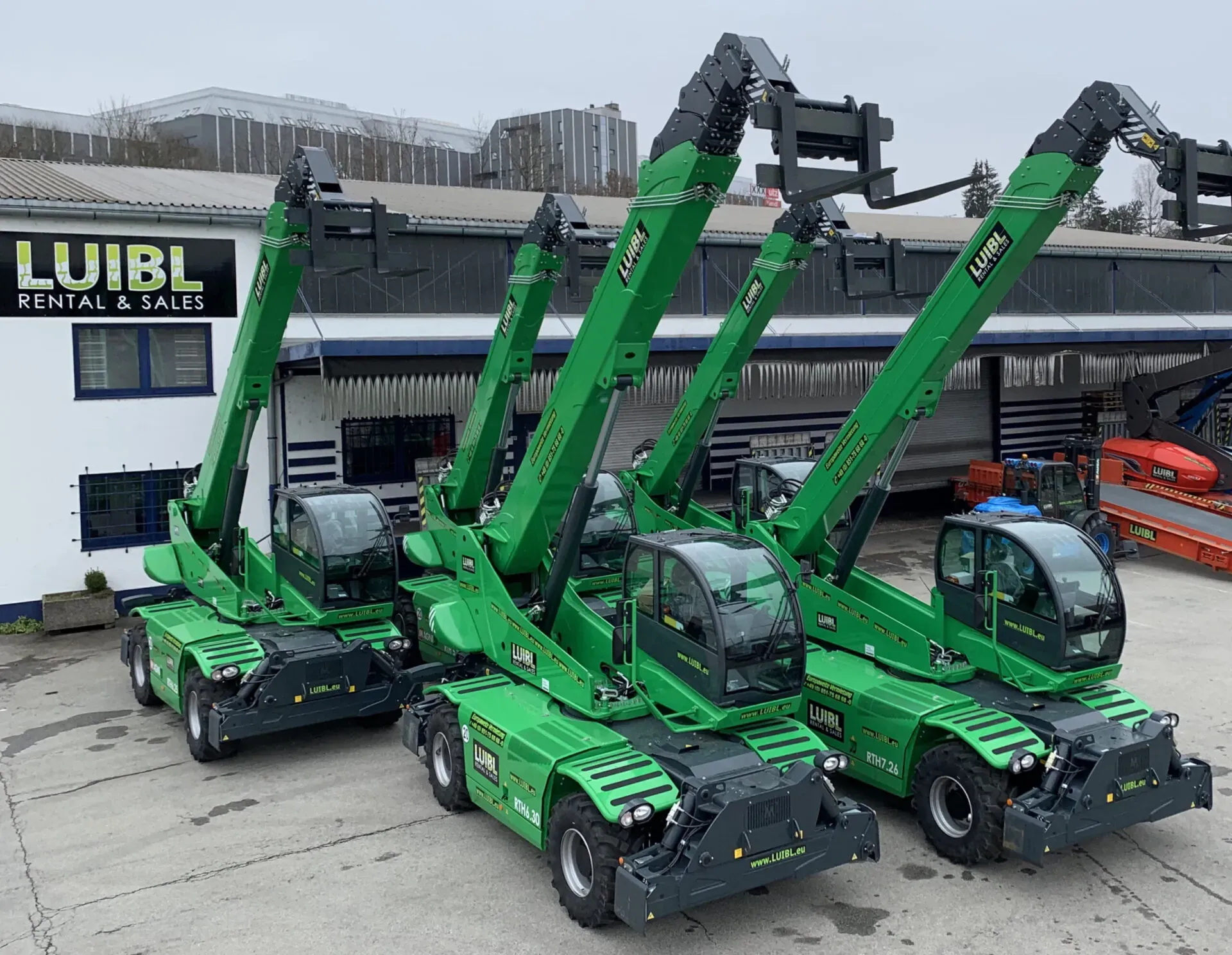
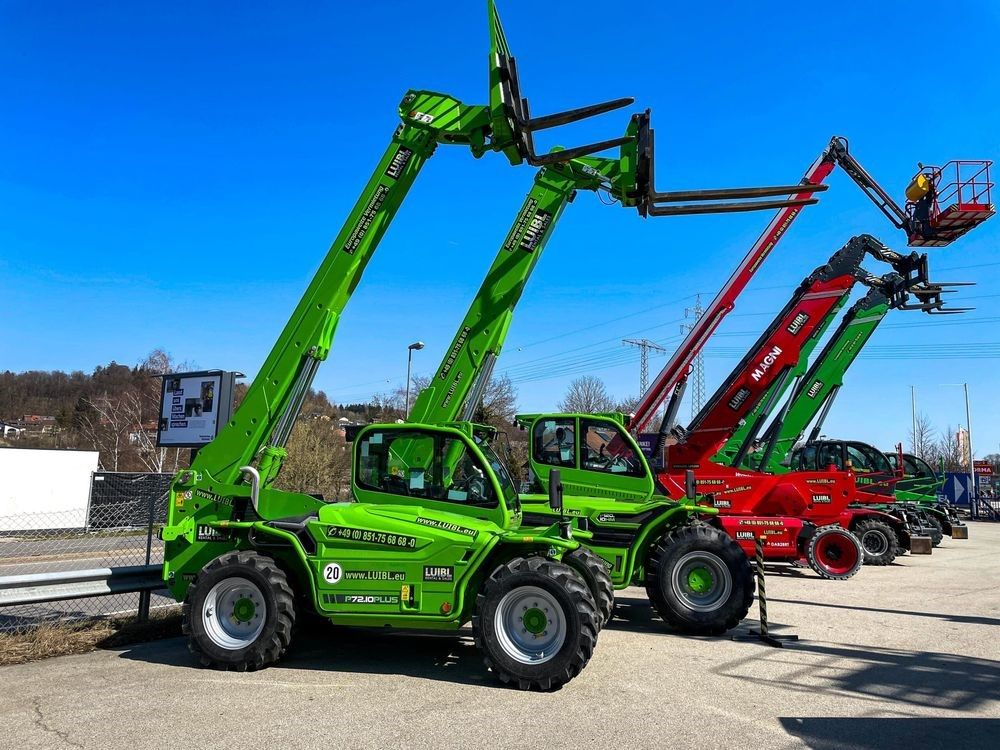
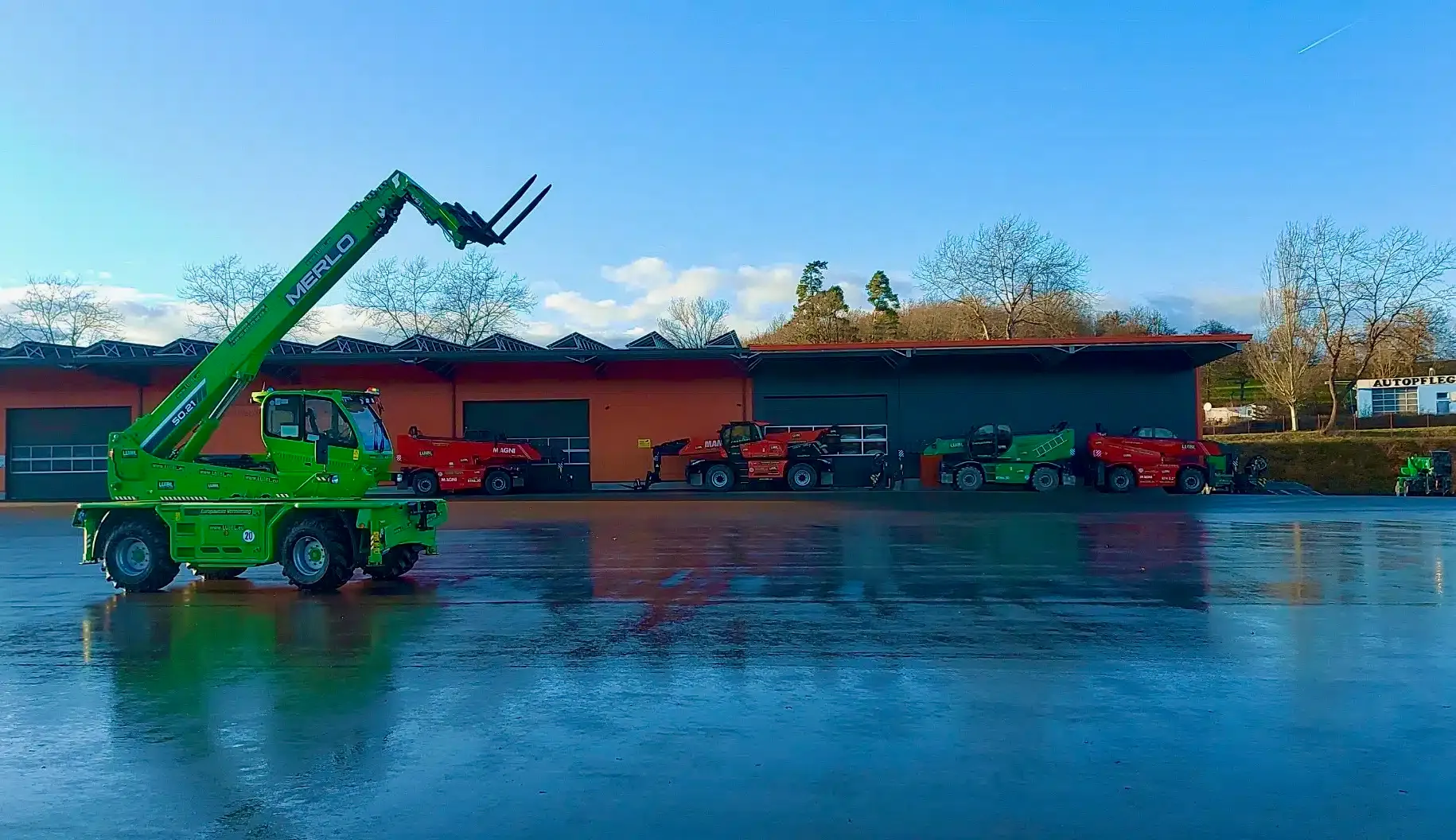
Grüne Teleskoplader aufgereiht vor der Halle

The new STN EN 280: key changes for operators of aerial work platforms

STN EN 280 is the European design and safety standard for mobile [aerial work platforms](https://www.luibl.eu/mieten/arbeitsbuehnen/). Anyone operating aerial work platforms, whether owned or rented, holds a document with a direct impact on operator obligations, risk assessment and the permissible use of the machines. In 2022, the previous single standard was split into two separate parts: **STN EN 280-1:2022** covers calculation, stability, construction, safety and tests. **STN EN 280-2:2022** deals with additional safety requirements for load handling devices on aerial work platforms. In addition, the draft standard **prEN 280-1:2024** has been available since November 2024, bringing further clarifications - not yet ratified, but already setting the direction for manufacturers and test bodies. This article explains which changes are relevant for daily operation and what operators need to consider when selecting and using rental machines from Luibl Rental.

Read more
Transport eines Teleskopladers

Inspections and maintenance records: why quality at Luibl Rental saves time

Anyone renting construction machinery is essentially buying one thing: operational safety. A machine that is on site but not ready for use causes costs that exceed the rental price several times over. Inspections and tests are more than bureaucratic box-ticking – they are documented proof that a machine is technically sound before the first operator gets in. For Luibl Rental, complete inspection and maintenance documentation is not a service extra but a basic requirement for every machine handover. What this means in concrete terms – for the legal certainty of the renting company and for project logistics on site – is explained in this article.

Read more
Teleskopbühnen im Gegenlicht auf dem Betriebsgelände

IPAF, PAL Card and operator licence: obligations when renting aerial work platforms

Anyone renting an aerial work platform — colloquially a lifting platform — needs **three pieces of proof** for every operator: proof of competence (**written confirmation of verified expertise** issued by a certified inspection technician under Section 17(3) Decree No. 508/2009 Coll.; an IPAF PAL Card supplements but does not replace it), **written authorisation** from the employer and a **machine-specific briefing** on the rental machine. The competence must also match the platform type: anyone trained only on scissor lifts may not operate an articulating boom lift. The obligation lies with the renting company as the operator. If any proof is missing and an accident occurs, the employer is liable — with consequences under occupational safety, civil and in some circumstances criminal law. This guide explains which proof applies to which [aerial work platform](https://www.luibl.eu/mieten/arbeitsbuehnen/), how the IPAF categories are assigned and what Luibl Rental provides on handover. All types you can rent from us are shown on the page [Lifting platform rental](https://www.luibl.eu/hebebuehne-mieten/).

Read more
Kalmar DCG 180-6T

Heavy-duty forklift rental: the practical guide for loads from 8 to 18 tonnes

Anyone who has to set a 12-tonne machine transformer down on foundation bolts with millimetre precision has a problem no standard counterbalance forklift can solve. Classic industrial forklifts top out at 5 tonnes - above that begins a separate machine class with its own physics, its own logistics and its own risks. This guide is aimed at logistics and production planners who need to know **which technical parameters really matter** before the machine is on site. The most common planning mistake is not too little load capacity, but a misjudged load centre distance. What looks like 18 tonnes on the data sheet is often only 12 in practice. At Luibl Rental you can rent [heavy-duty forklifts](https://www.luibl.eu/mieten/gabelstapler/schwerlaststapler/) from **Kalmar, Hyundai and EP** with load capacities from 8 to 18 tonnes, in diesel and electric versions, with [delivery throughout Slovakia](https://www.luibl.eu/standorte/) by our own low-loader fleet.

Read more
MIK-3053 | Maeda MK3053CB

Delivering glazing projects efficiently: mini cranes and vacuum lifters from Luibl Rental

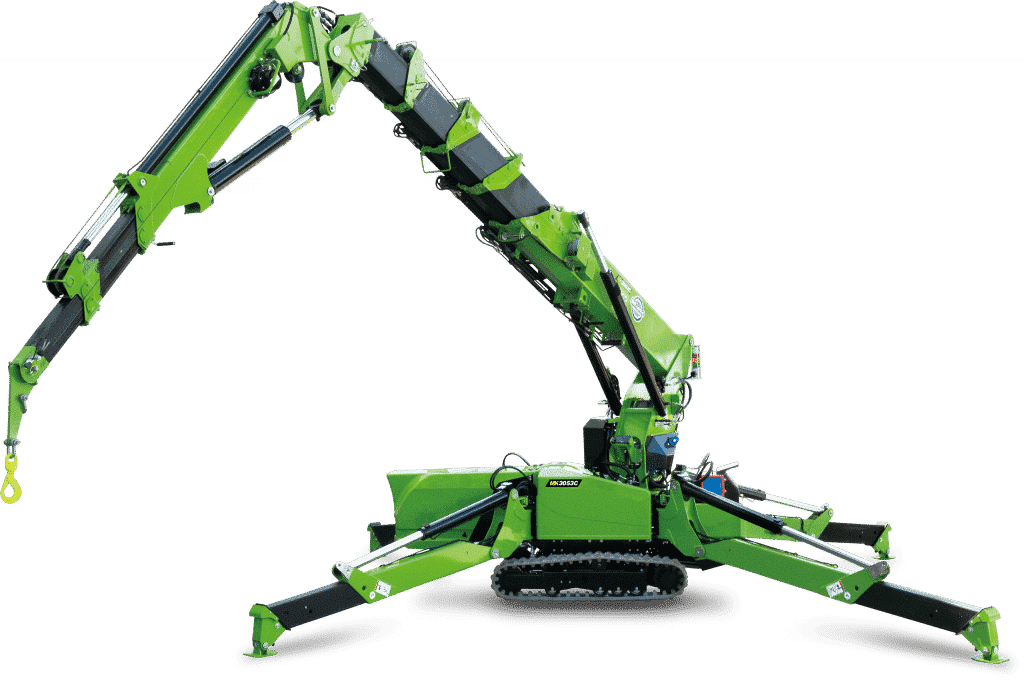
Glass facades, steel-and-glass structures and laminated panes for atriums, office towers and production halls today rarely weigh less than 500 kilograms. Triple glazing in an aluminium frame for an office building of standard size quickly reaches 380 to 600 kg per element, and special panes for lobbies and showrooms regularly exceed 800 kg. Anyone who has to bring such loads to the fifth floor through a stairwell or across a courtyard to the installation position will find a mobile crane lacks set-up space, an aerial work platform lacks load capacity, and manual handling runs up against occupational safety rules. The answer lies in combining a **[mini crane](https://www.luibl.eu/mieten/krane/minikran/)** and a **vacuum lifter** - two machines that each have their own speciality and together become the only economical solution as soon as the site is tight, the ground sensitive and the load demanding. Luibl Rental offers a coordinated rental package for exactly this application profile. The mini crane fleet is based on the **Maeda range**, with models from the 600 mm narrow [MC104C](https://www.luibl.eu/mieten/krane/minikran/maeda-mc104c-mik-104/) to the heavy-duty [MC815C](https://www.luibl.eu/mieten/krane/minikran/maeda-mc815c-mik-815/) with more than 8 tonnes of load capacity. The matching **vacuum technology** is supplied by the sister brand **Uplifter** within the Luibl Group - glass vacuum lifters with single- and dual-circuit systems up to 1,200 kg load capacity that can be hung seamlessly on the hook of any Maeda crane. This pillar page provides an in-depth view: which technological synergy between crane and vacuum lifter determines project success? Which load capacity reserves can actually be used at which outreach? And what does practice look like with an 800 kg facade element in a city-centre location?

Read more
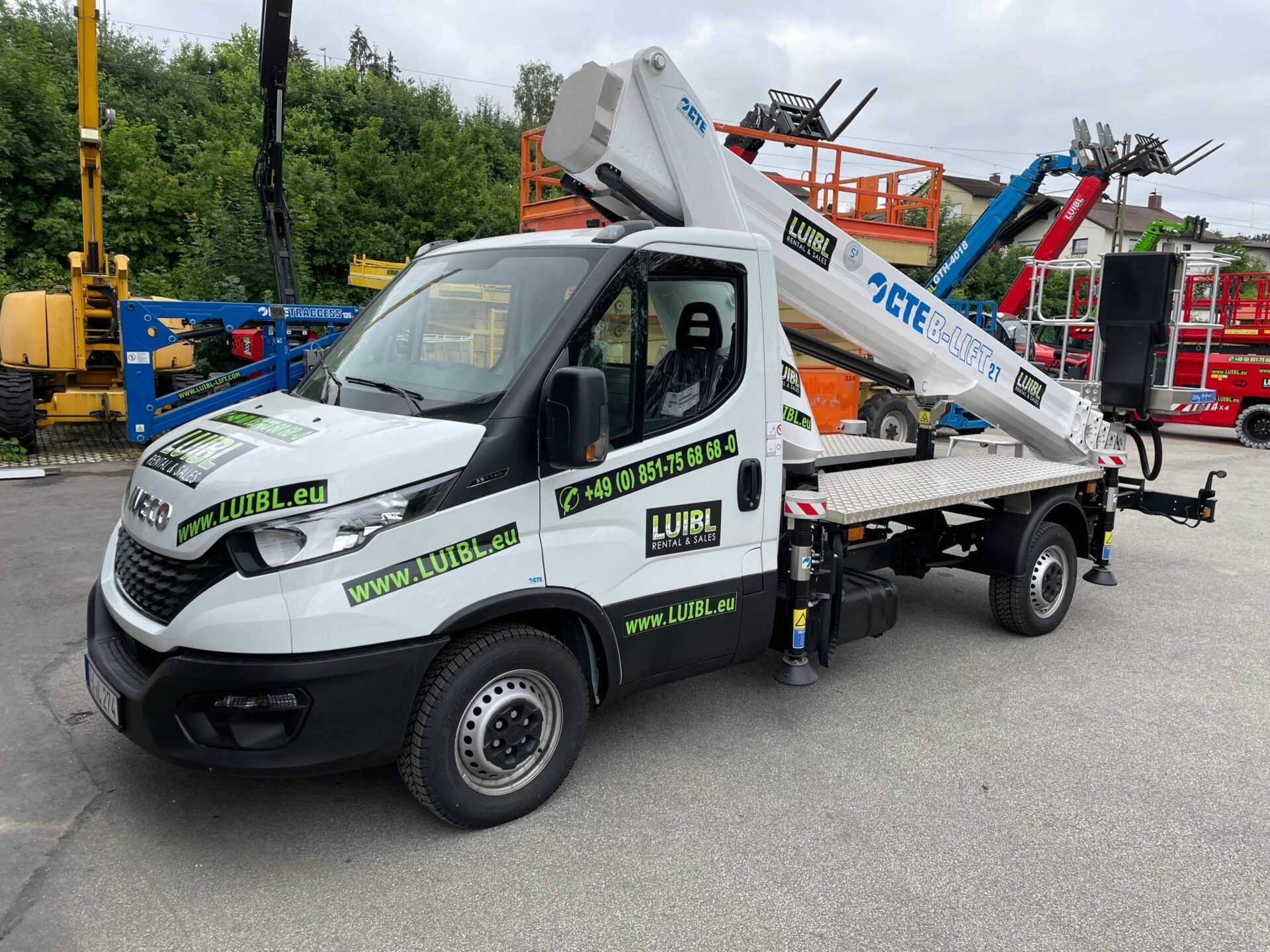
Lkw-Arbeitsbühne auf einem Transporter-Fahrgestell

Renting a truck-mounted or trailer-mounted platform: which suits your job?

Anyone wanting to rent an aerial work platform thinks first of working height and price. Yet one question is at least as important: how does the machine get to the site - and how quickly is it ready for use there? [Truck-mounted platforms](https://www.luibl.eu/mieten/arbeitsbuehnen/lkw-buehnen/) and trailer-mounted platforms solve the same basic problem in two fundamentally different ways. Which option is the better choice for your specific case depends on factors that are often overlooked in consultations. This article explains both machine types in technical, factual terms, names their real strengths - and shows when each solution makes sense.

Read more
Arbeitsbühne mieten bei LUIBL

Scaffolding - when scaffolding pays off and when an aerial work platform is the better choice

Scaffolding accompanies every larger construction project - from facade renovation and new builds to industrial installation. Yet stationary facade scaffolding has long ceased to be the only option for working safely at height. Over the past two decades, [aerial work platforms](https://www.luibl.eu/mieten/arbeitsbuehnen/), telescopic boom lifts and scissor lifts have become a genuine alternative: ready for use faster, more economical for short jobs and safer for spot work over obstacles. This guide explains how modern scaffolding is structured, shows which jobs still belong to conventional scaffolding - and where an aerial work platform is technically and economically superior. Luibl Rental & Sales specialises in access equipment at height and, with delivery throughout Slovakia, supplies aerial work platforms that replace or usefully complement scaffolding on many jobs.

Read more
Grüne Teleskoplader aufgereiht vor der Halle

Industrial trucks: technology, applications and selection

Industrial truck is the generic term standardised in ISO 5053 for floor-bound conveyors that are not guided by rails. It covers [forklifts](https://www.luibl.eu/mieten/gabelstapler/) of all designs, high-lift trucks, reach trucks, pedestrian stackers, rough-terrain forklifts and telehandlers. In everyday language, "industrial truck" and "forklift" are often used synonymously - technically, the forklift is a subgroup. This guide explains the individual designs, the legal framework under occupational safety rules (Act No. 124/2006 Coll.) and Government Regulation No. 392/2006 Coll. (work equipment), and the selection criteria that really make the difference in practice. It is aimed at dispatchers, site managers and buyers preparing a purchase or rental decision.

Read more
Teleskoparbeitsbühnen in Rot, Grün und Blau auf dem Betriebsgelände

Aerial work platform rental: calculating the daily cost and total cost correctly

Depending on type and working height, renting an aerial work platform costs **around 80 € per day for a small electric scissor lift up to 10 m** and up to **around 1,100 € per day for a large truck-mounted platform**. For the calculation, however, the daily rate alone is not enough: transport, insurance, rental period and the choice of the right type determine what the job really costs in the end. Buyers and site managers know the situation: three quotes for the same task are often far apart. This is rarely due to the daily rate, but to the items around it — sometimes transport is included, sometimes not, sometimes a weekly price applies, sometimes a daily price. This guide shows how to build a reliable total calculation from the four cost blocks and works through a job step by step. Whether you say "aerial work platform", "lifting platform", "elevated work platform" or "access platform": it is the same machine category under EN 280, and the same prices apply. You will find an overview of all types on the page [Lifting platform rental](https://www.luibl.eu/hebebuehne-mieten/).

Read more
Scherenbühnen in Rot und Grün auf dem Mietgelände

Scissor lift rental: electric or diesel? The complete guide for your project

When planning work at height, the [scissor lift](https://www.luibl.eu/mieten/arbeitsbuehnen/scherenbuehnen/) is often the backbone of efficiency. But the choice between electric and diesel drive is more than a question of fuel - it determines whether the machine is permitted on site, the safety of your team and the cost-effectiveness of the whole project. Luibl Rental helps you choose the optimal machine from our rental fleet.

Read more
Manitou Roto Teleskopstaple

Fixed or roto: which telehandler is right for your project?

Choosing the right telehandler is one of the most critical decisions in construction planning. It affects not only daily rental costs but also the speed of progress, the space needed on site and the safety of your team. Planners often face the question: is a [fixed telehandler](https://www.luibl.eu/mieten/teleskoplader/starr/) enough, or does the enormous flexibility of a rotating model ([Roto](https://www.luibl.eu/mieten/teleskoplader/roto/)) justify the investment? As a specialist in access technology, Luibl Rental offers not only a modern fleet but also the expertise to resolve this fundamental rental question. In this guide we compare the statics, dynamics and cost-effectiveness of both systems in detail. An overview of all telehandler types, attachments and obligations is provided in the [telehandler guide](https://www.luibl.eu/ratgeber/teleskoplader/). ## The fixed telehandler: the powerhouse for horizontal work A fixed telehandler (often simply called a "telehandler") is designed for maximum robustness and simple, powerful lifting. Because the superstructure is rigidly connected to the chassis, load distribution is straightforward. ### Design advantages and statics On a fixed model, the load is picked up mainly to the front. This allows a design built for extreme compressive loads. - Pick-and-carry capability: fixed telehandlers are ideal for picking up loads on the forks and moving them across the site. - Low centre of gravity: without a slewing ring the centre of gravity is lower, which increases stability on uneven ground. - Simple operation: less complex control systems mean shorter familiarisation time for staff. ### When to rent a fixed telehandler from Luibl Rental: - Material handling: unloading trucks and moving pallets over long distances on site. - Earthworks and agriculture: use with a bucket for bulk material or earthworks. - Budget focus: on projects that only need lifting power and have enough room to manoeuvre, the fixed telehandler is the most cost-efficient solution. ## The roto telehandler: maximum efficiency thanks to 360-degree technology The rotating telehandler, or "Roto" for short, is the technological evolution of the telehandler. Brands such as Magni, Manitou and Merlo have developed machines that combine the functions of a forklift, a mobile crane and an [aerial work platform](https://www.luibl.eu/mieten/arbeitsbuehnen/) in one machine. The game changer: unlimited slewing A Roto from Luibl Rental has a superstructure that rotates through 360 degrees (often continuously). This fundamentally changes the way you work: - Stationary work: the operator positions the machine centrally once and reaches every point within the working radius without moving the chassis. - Precision at height: thanks to rotation, loads can be swung into facades or building openings with centimetre accuracy. - Space saving: especially on inner-city sites, where every square metre counts, the Roto has the edge because it needs no manoeuvring space. Magni technology: setting standards in the roto class Luibl Rental increasingly relies on Magni models. In the Luibl rental fleet, roto telehandlers reach lift heights of up to 38.90 m. Magni machines work with a digital load management system. Automatic [attachment](https://www.luibl.eu/mieten/teleskoplader/anbaugeraete/) recognition ensures that the machine immediately knows which load chart (forks, winch or basket) to apply. ## Technical differentiators To make the right choice, we need to look more closely at the technical equipment, which often determines the success of a project. ### Outrigger systems: scissor vs. fold-down A decisive difference lies in stabilisation: 1. Fixed telehandler: often has front stabilisers or works purely with axle locking. This limits the working area to the front. 2. Roto: uses complex outrigger systems. A distinction is made between fold-down outriggers (quickly ready for use) and scissor outriggers (variably extendable). Modern roto machines calculate the load capacity individually for each outrigger position - ideal where space is tight. ### Load charts and outreach While fixed models have their strengths up to 18 metres of lift height, the roto range often only begins there. **Vertical vs. horizontal**: a fixed telehandler quickly loses load capacity at large horizontal outreach. A Roto compensates for this better thanks to its massive counterweight and wide outrigger base. ## The 3-in-1 solution: attachments make the difference Versatility is the strongest argument for renting from Luibl Rental. Both machine types can be transformed using quick-change systems: - Pallet forks: the standard for both types. - Winches and load hooks: turn the telehandler into a mobile crane. Especially with a Roto, this often saves renting an expensive mobile crane. - Work baskets: equipped with radio remote control, the roto becomes an aerial work platform. The operator can control the basket directly from the basket - maximum efficiency for facade work. - Vacuum lifters: ideal for glass installation combined with the precise control of a roto. ## Cost-effectiveness: rental vs. benefit A roto has a higher daily rate than a fixed telehandler. So why does renting one from Luibl Rental often pay off more? 1. Time saved: with no manoeuvring time, a Roto often completes tasks in half the time. 2. Staff costs: one machine replaces three. You need fewer operators and less parking space. 3. No downtime: its all-round capability means the machine is busy all day (forklift in the morning, crane in the afternoon). ## Safety and legal requirements Safety is the top priority at Luibl Rental. Strict rules apply to both machine types: - Operator competence: operating a telehandler requires the necessary operator competence in line with applicable Slovak safety rules; we provide an operator briefing on handover. - Inspections: all Luibl Rental machines are delivered only with valid inspections and tests of technical equipment (Decree No. 508/2009 Coll.) and a maintenance record. - Safety systems: modern load moment limiters prevent both types from tipping by switching off automatically in the event of overload.

Read more
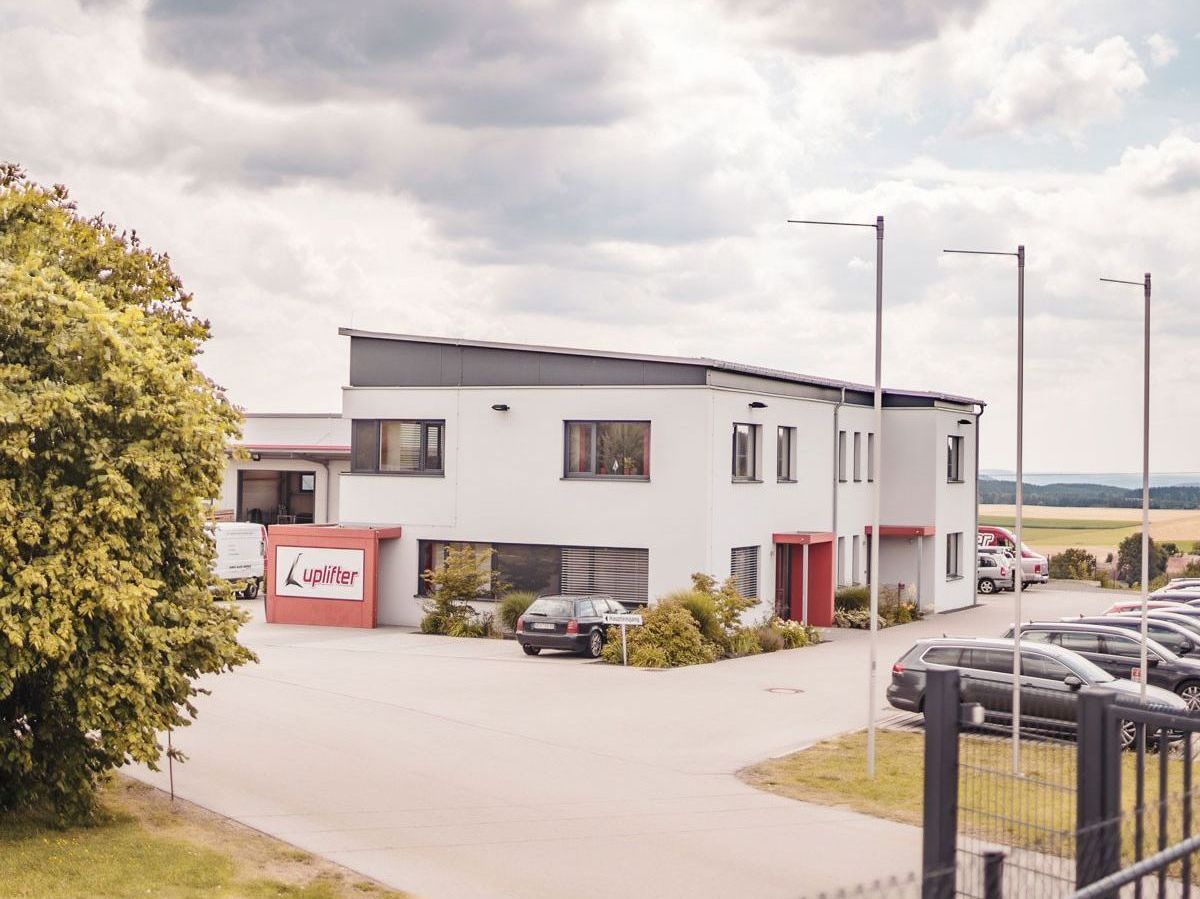
Uplifter Zentrale Oberaich Nabburg

Luibl Group takes over Uplifter

Luibl Group has bought the renowned mini crane and glass lifter specialist out of insolvency Luibl Group has taken over the operating business of the specialist for mini cranes, vacuum technology and glass lifters based in Guteneck near Nabburg – including 45 employees in rental, sales, service, machine operation and transport. **The former Uplifter GmbH & Co. KG is being wound up by the insolvency administrator.** Karl Bauer, owner of Luibl Group, has founded a new group of companies for this step, which will operate under the name **Uplifter Group** in future. However, it is not responsible for the operating business. Several subsidiaries were founded to take over the different business units of Uplifter: · **Uplifter Rental:** The rental business will continue independently under the Uplifter brand. Close cooperation with Luibl Rental will take place on a project basis only to bundle synergies and save costs. This improves customer service and comprehensive support for shared customers across the group. **Large construction groups** and **re-rental partners** in particular will benefit from the wide range of large machines and special solutions. **The mini crane rental business will be further internationalised** in order to serve the markets covered by Luibl Rental in **Austria, Hungary and Eastern Europe** in general with the newly acquired rental machines. · **Uplifter Trading:** The sales and distribution business for **mini cranes, vacuum technology and glass lifters** will continue under Uplifter Trading. New brand partnerships will be established step by step to further expand the trading business. **Industry pioneer Martin Lobinger** remains with the future group to continue developing his life's work. Mini cranes and glass lifters are still sometimes referred to as **"Uplifters"** today, because Mr Lobinger established these machine types on the German market. · **Uplifter Service:** The service business for mini cranes, vacuum technology and glass lifters will be handled by this company in future. This strategic focus allows a **gradual expansion of the service offering to other product areas,** such as aerial work platforms, construction machinery, forklifts and telehandlers. · **Machineoperators:** For the professional handling of operator assignments, the group offers Machineoperators as a separate company in Germany. There, operators for machines can be hired by the hour, day, week or month. In the near future also for all other machines of the Luibl Rental group. Together with Uplifter Group, Luibl Rental Group now has well over 1,000 rental machines. These are rented out in Germany from more than **11 locations**. New additions are the locations in **Munich, Stuttgart, Frankfurt am Main, Dusseldorf, Hamburg and Berlin**, as well as the Uplifter Group headquarters in **Oberaich near Nabburg in the Upper Palatinate.** The large Luibl logistics hubs in Passau on the Austrian border, in Weissenfels near Leipzig, in Volkmarsen near Kassel and in Schillingsfuerst at the Crailsheim/Feuchtwangen motorway junction remain in place. The takeover significantly strengthens regional customer proximity and local presence.

Read more
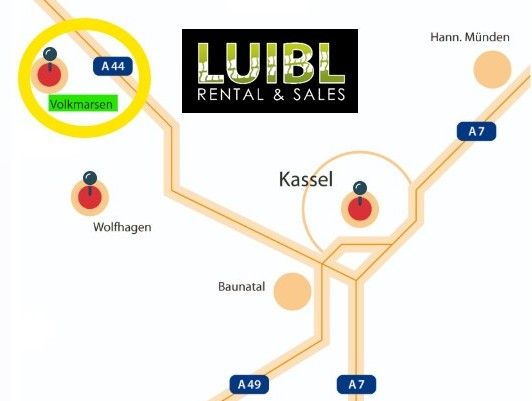
Karte mit Volkmarsen an der A44 nordwestlich von Kassel

Another Luibl location

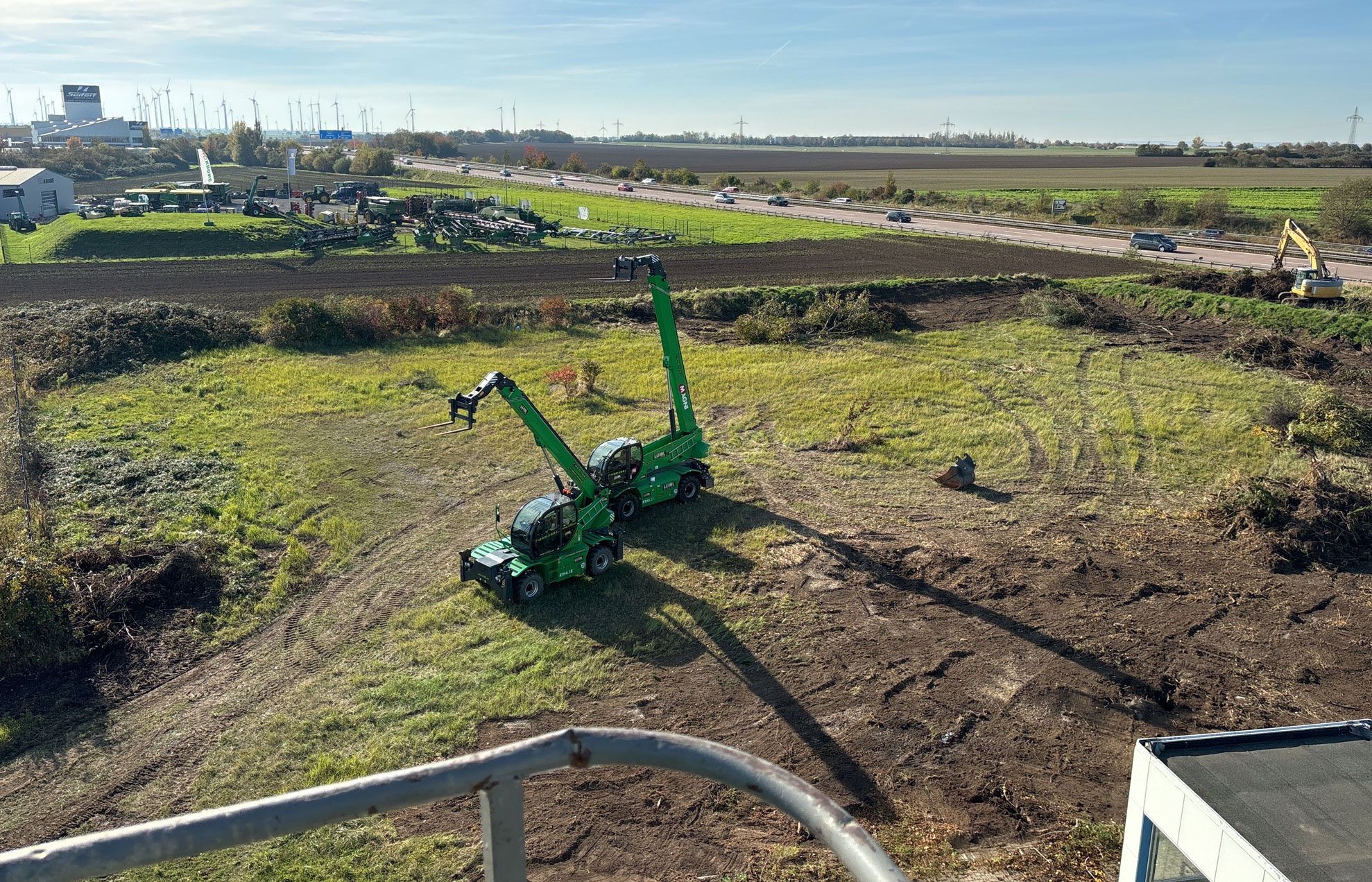
Luibl Rental Group has acquired another logistics location near Kassel in the town of Volkmarsen. **The aim is to increase the availability of rental machines in central and northern Germany.** This will allow large construction sites to be served even more efficiently in future and **shorten transport routes for rehire partners** who rent special and large machines from Luibl. The company's strategy is explicitly not to create regional competition for small and medium-sized rental companies, but to **expand the partnership with its rehire partners**. This enables them to serve their regional customers even better without having to purchase every special machine themselves. It also shortens logistics routes for handling large projects of key account customers in northern Germany. This location in the centre of Germany helps in particular to serve customers and rental companies in the **Kassel, Goettingen, Hannover, Paderborn, Bielefeld, Dortmund, Muenster, Marburg, Frankfurt am Main and Erfurt** areas, but transport routes are also shortened for projects in the north, for example in **Bremen and Hamburg**. The acquired site was previously operated as a construction machinery rental business and has two warehouses including office wings and workshops. For optimum customer service, there is also a wash bay on the premises. In theory, the new logistics hub offers space for up to 600 machines. With this step, Luibl Rental consolidates its growing position in the German rental market. Only recently, investments were made in **Leipzig** and at the **A6/A7 motorway junction in Crailsheim / Feuchtwangen in Baden-Wuerttemberg**. The additional hub underlines the company's long-term growth concept – with a clear focus on quality, regional availability for major customers and its position as a high-performance partner for other rental companies.

Read more
Grüner Teleskoplader auf einer Baustelle in Weißenfels

Luibl builds new HUB in Weissenfels

The Luibl Rental Group continues to grow and is investing in a new site in eastern Germany. In Weissenfels, close to the Leipzig metropolitan region and in direct view of the A9 motorway, the new eastern headquarters of the Europe-wide rental provider of aerial work platforms, telehandlers and forklifts will be built by the end of 2027 / early 2028. With the new building, Luibl Rental strengthens its position as one of the leading providers of specialist equipment in Central Europe. An office building already stands on the spacious plot - it is now being complemented by a modern logistics hall, a fully equipped workshop with crane runway and its own wash hall. "The new site will be a central hub for our activities in eastern Germany," says company owner Karl Bauer. In future, up to 50 employees from dispatch, sales, technical, service and logistics are to work from Weissenfels. The site will also serve as a regional distribution centre (HUB). In addition to the new eastern HUB in Weissenfels, the Luibl Rental Group already successfully operates its southern HUB in the municipality of Schillingsfuerst, directly at the Crailsheim/Feuchtwangen motorway junction (A6/A7). The strategically located site serves as a central hub for southern Germany. With a broad rental fleet, including telehandlers with lift heights of up to 39 metres and load capacities of 20 tonnes as well as aerial work platforms with working heights of up to 57 metres, Luibl Rental focuses on specialist solutions for demanding applications in industry, construction and infrastructure. The new HUB underlines the company's long-term growth strategy - with a clear focus on quality, availability and regional proximity to customers.

Read more
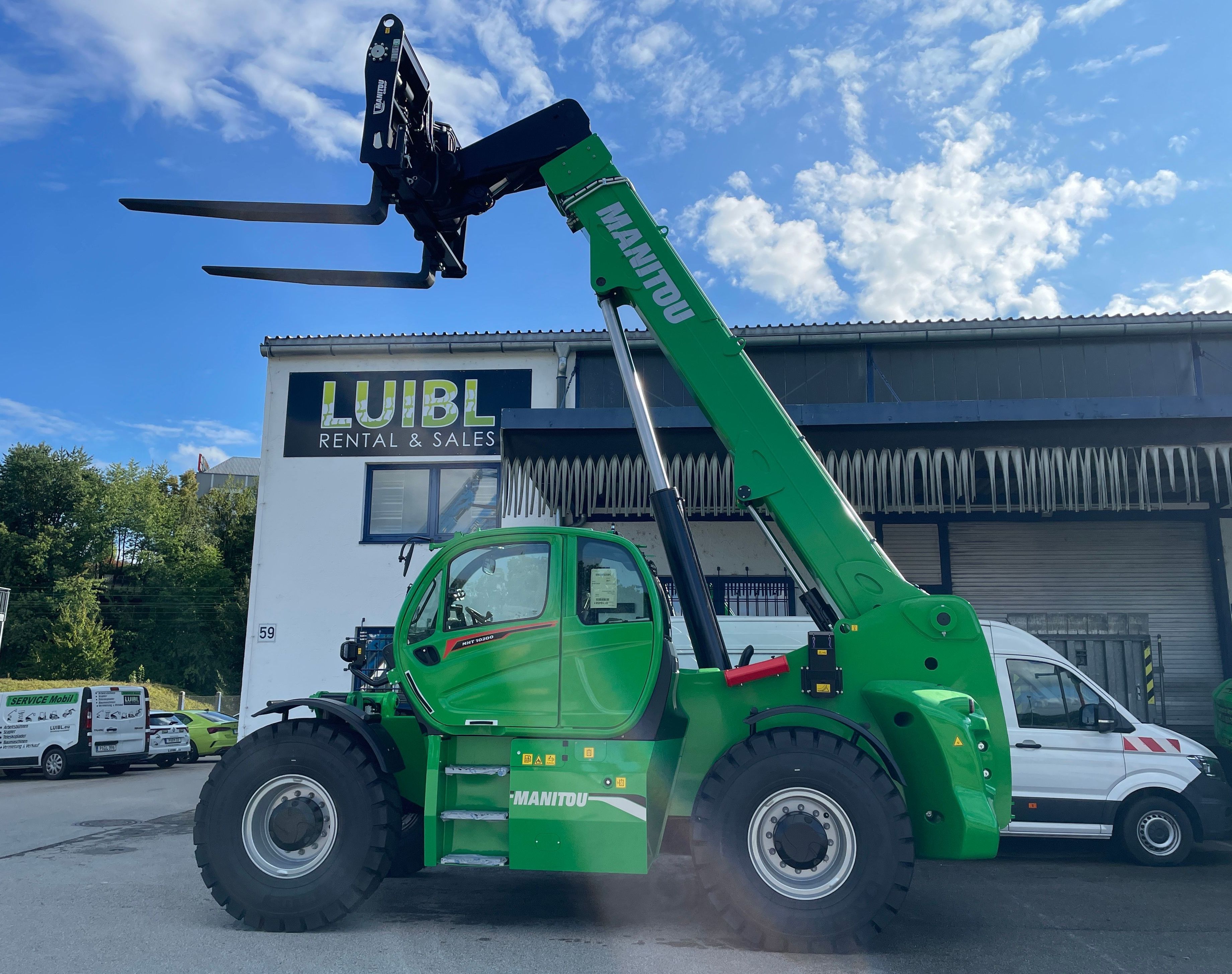
Grüner Manitou MHT 10200 Teleskoplader mit Gabel und ausgefahrenem Ausleger vor einer Halle

20-tonne Manitou MHT 10200 for Luibl Rental

The long-standing partnership between Luibl and [Manitou](https://www.luibl.eu/manitou/) continues with the latest delivery of a 20-tonne telehandler. With a load capacity of 20 tonnes and a lift height of 10 metres, the MHT 10200 model offers impressive performance figures. [Back in 2023, Luibl Rental already received several Manitou MHT 10160 with a load capacity of 16 tonnes.](https://vertikal.net/de/news/beitrag/42440/16-tonnen-manitous-mht-10160-fur-luibl-rental) Thanks to its 4 driven and steered wheels, the MHT 10200 is ideally suited to moving heavy and bulky loads safely on any terrain. As usual with Manitou, this telehandler also features the ergonomically optimised panoramic cab with Easy-Step access. For easy operation, it has a JSM joystick and a colour touchscreen display. The MHT 10200 performance data at a glance: • 20 tonnes load capacity • 10 metres lift height • 5.40 m outreach • 211 hp output • Versatile use with attachments A major added value of the Manitou MHT 10200 is its versatility thanks to the wide range of attachments such as: forks, hooks, fork positioners and other tools. With this investment, Luibl Rental consolidates its position as one of the leading telehandler rental providers in Central Europe. Almost all models from [Manitou](https://www.luibl.eu/manitou/), Merlo and Magni with up to 39 m lift height and 20 tonnes load capacity are available for rent.

Read more
Luibl Rental Crailsheim Feuchtwangen

Luibl expands in south-west Germany

At the start of the year we moved into a new site in the municipality of Schillingsfuerst. The site is conveniently located at the A6/A7 motorway junction Crailsheim / Feuchtwangen. This strategically advantageous location allows us to serve the Nuremberg, Heilbronn, Wuerzburg, Stuttgart and Mannheim areas even better. Transport routes towards Frankfurt, western Germany and the Ruhr area are also shorter. With this investment we are taking an important step towards becoming one of the leading providers of aerial work platforms and telehandlers in Central Europe. The extensive company site is largely paved and has two large warehouses. The new site offers space for up to 700 machines. The new branch therefore fits strategically well into the concept of serving large construction sites across Germany in cooperation with partner companies.

Read more
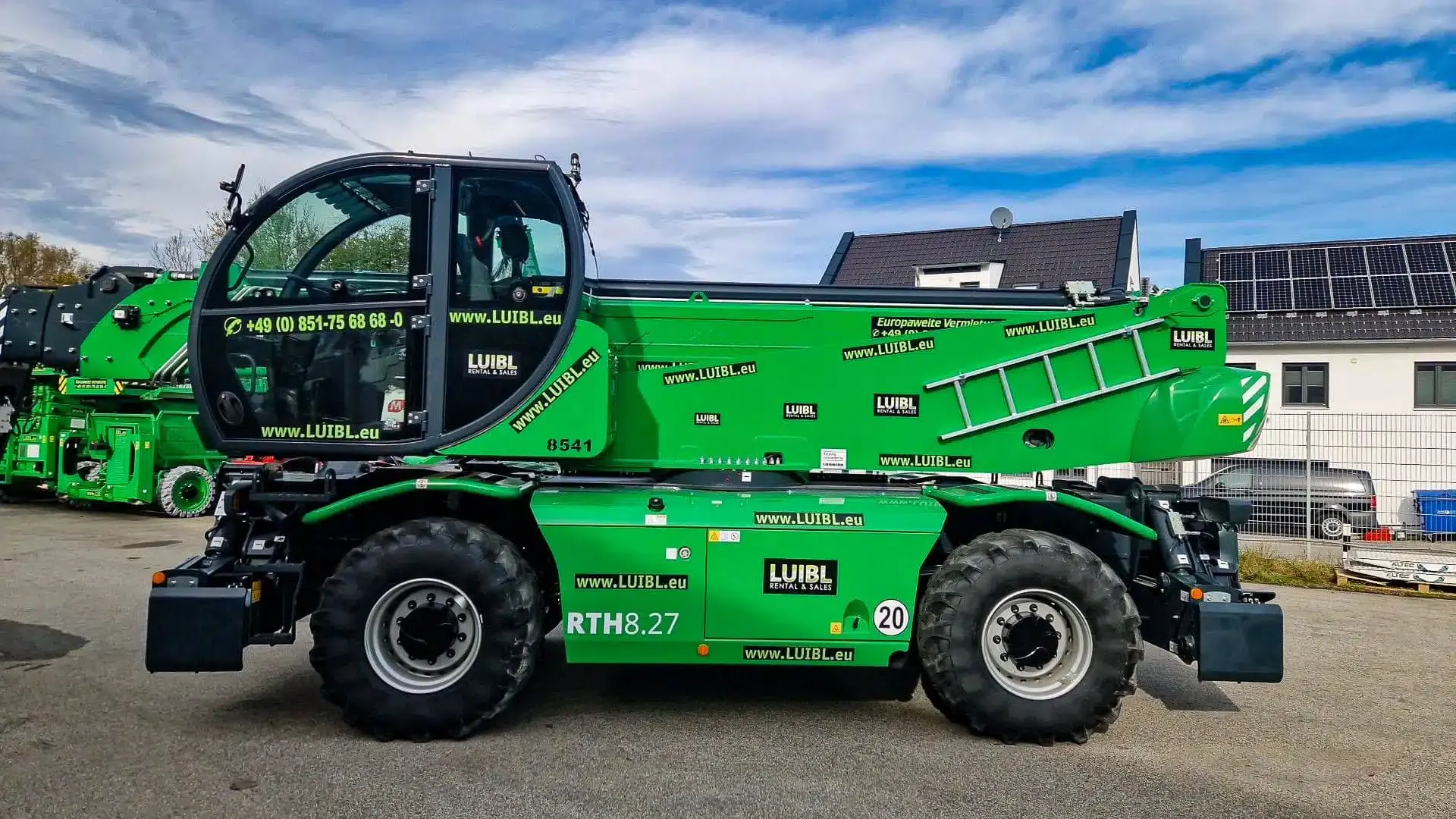
Grüner Magni Roto-Teleskoplader auf dem Betriebsgelände

Magni RTH 8.27: Luibl receives the first machines in Germany

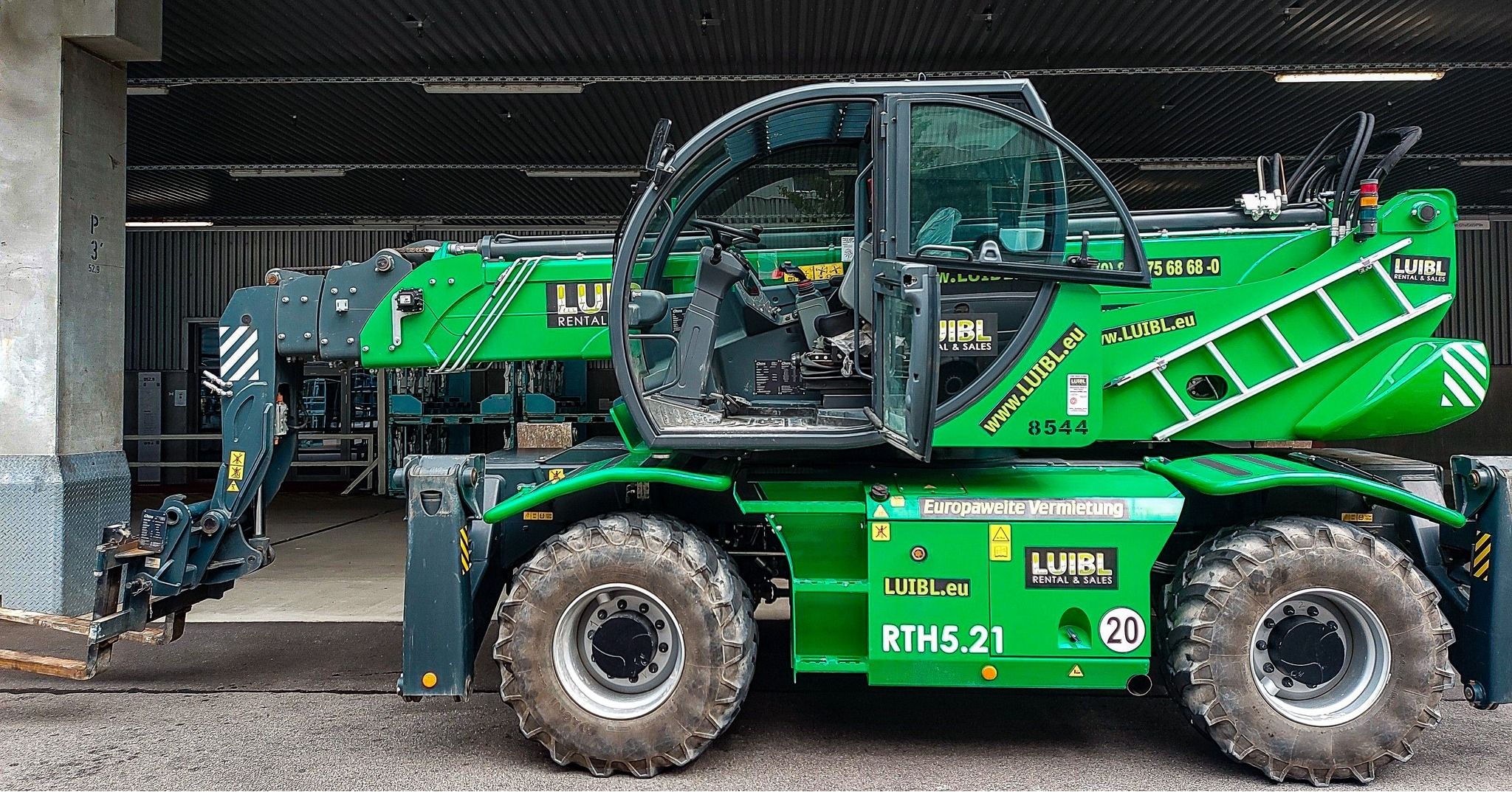
## The first Magni RTH 8.27 with 8 tonnes load capacity have been successfully delivered to Luibl Rental and are already in operation. Luibl Rental & Sales has recently expanded its range with several state-of-the-art Magni RTH 8.27 telescopic machines. This machine is not only new in the Magni range, but also a remarkable addition for Luibl Rental. The machine is the first roto telehandler to achieve 8 tonnes load capacity while still meeting the transport dimensions for normal road transport. ## Focus on the Magni RTH 8.27 The Magni RTH 8.27 is a telescopic machine that stands out for its versatility and performance. Here are some of the machine's most important features and benefits: Technical data of the Magni RTH 8.27 - Maximum lift height: 27 metres - Maximum load capacity: 8 tonnes - Outreach: 23.2 metres - Rotation angle: 360 degrees - Off-road capability: excellent on uneven terrain - Versatility: suitable for construction, maintenance and more The Magni RTH 8.27 is characterised by its impressive lift height and load capacity, making it ideal for a wide range of tasks in construction and maintenance. With 360-degree rotation and its ability to work on uneven terrain, it offers maximum flexibility. This machine enables Luibl Rental & Sales to offer its customers an even wider range of solutions and to meet growing demands. The Magni RTH 8.27 is a remarkable addition for Luibl Rental & Sales and underlines its commitment to offering customers high-quality and innovative solutions. With this telescopic machine, construction and maintenance projects can be carried out more efficiently and safely, making it a valuable investment for companies in various industries.

Read more
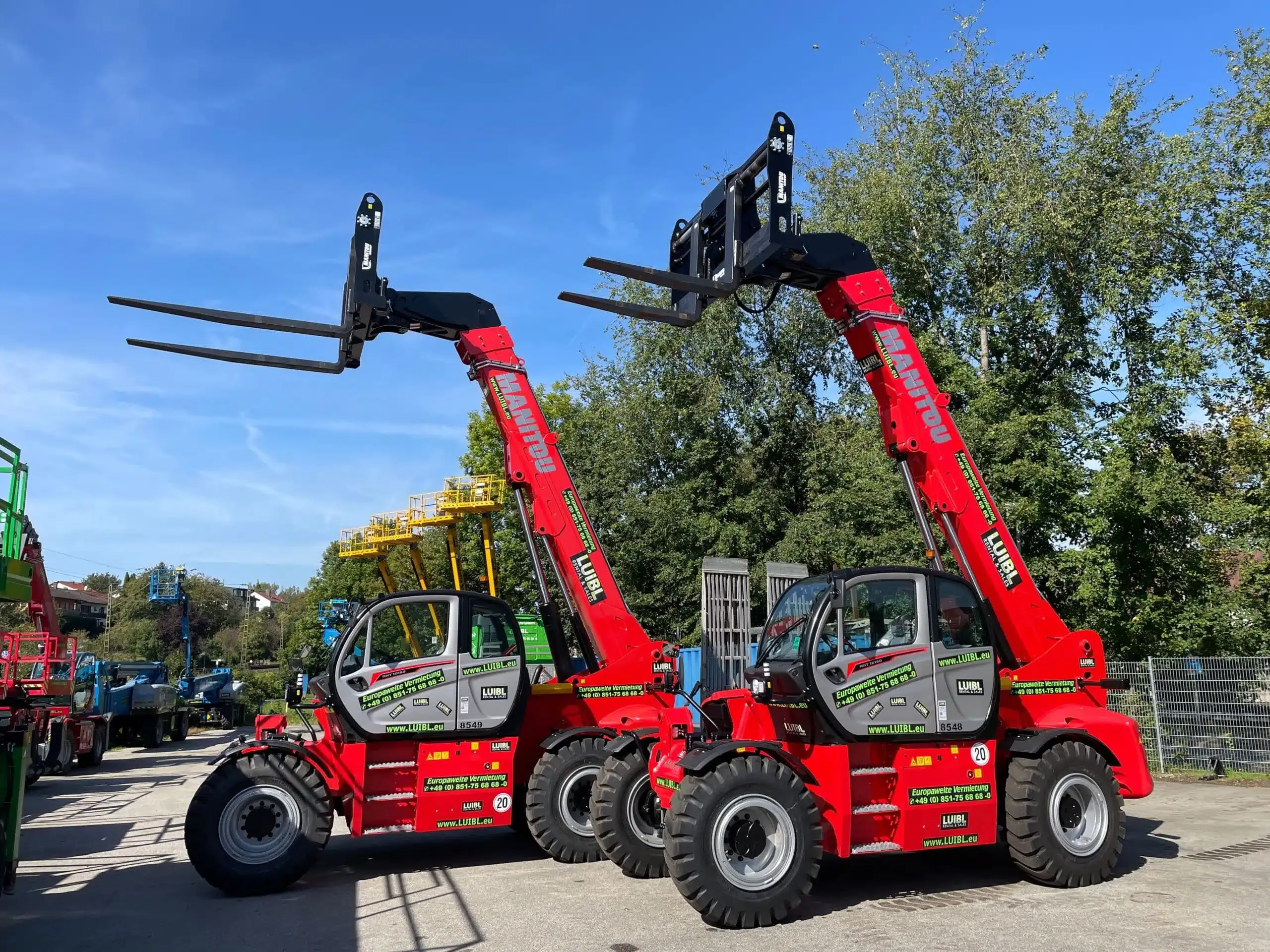
Manitou MHT 10160

16-tonne heavy-duty telehandler Manitou MHT 10160 for Luibl Rental

The Luibl Rental Group is expanding its rental offer with the latest 16-tonne heavy-duty telehandlers from [Manitou](https://www.luibl.eu/manitou/) The long-standing partnership between Luibl and Manitou continues with the latest delivery of 16-tonne telehandlers. With a load capacity of 16 tonnes and a lift height of 10 metres, the MHT 10160 offers impressive performance. Thanks to its 4 driven and steered wheels, the MHT 10160 is ideal for moving heavy and bulky loads safely on any terrain. As usual with Manitou, this telehandler also features the ergonomically optimised panoramic cab with Easy-Step access. For easy operation, it has a JSM joystick and a colour touchscreen display. ## Performance data at a glance - 16 tonnes load capacity - 10 metres lift height - 5.20 m outreach - 173 hp output - Versatile thanks to attachments A major benefit of the Manitou MHT 10160 is its versatility thanks to a wide range of attachments such as forks, hooks and winches, positioners, work basket, bucket and much more. Rental customers can already obtain roto telehandlers with lift heights of up to 39 metres as well as telehandlers from Magni and Merlo. This gives customers a free choice of both versions and brands. The wider Luibl rental range of special equipment also offers end customers and re-renters a broad spectrum. Whether 48 m or 57 m telescopic boom lifts, diesel scissor lifts up to 34 m or high-rack scissor lifts with 28 m and 33 m. Luibl is your business partner when you need a reliable supplier with high-quality machines, its own low-loader fleet and delivery throughout Slovakia.

Read more
20 Magnis für Luibl

20 more Magni Roto machines for Luibl

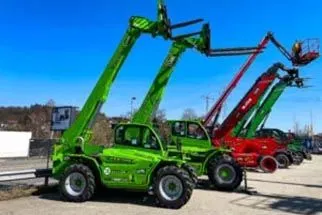
With 20 rotating Magni telehandlers in various versions up to 39 m, Luibl Rental & Sales is expanding its rental range. Following the mega deal with [Manitou](https://www.luibl.eu/manitou/), a further 20 Magni Roto telehandlers have now been ordered. The first machines were delivered at the beginning of Q2 this year. The last machines in the order are expected at the end of Q2 2023. ## Our new Magni models The order from the Italian telehandler manufacturer Magni comprises the models: - Magni RTH 4.18 - Magni RTH 5.21 - Magni RTH 6.21 - Magni RTH 6.39 - Magni RTH 7.26 All models are equipped with modern Stage V engines, load monitoring and Magni's automatic attachment recognition R.F.ID. The latter activates the appropriate load charts for optimum use of the machine. The folding or scissor outriggers also ensure high stability. Depending on the model, the new Magnis offer a lift height of between 18 and 39 metres with a load capacity of 4 – 7 tonnes. This opens up a wide range of options for our rental customers. Thanks to the wide variety of attachments, such as winch, work basket, bucket or load hook, the telehandler is the ideal companion for construction and industry. ## Convincing features - Automatic levelling - Four-wheel drive - R.F.ID - Load monitoring - Stage V engines - Folding outriggers / scissor outriggers The new Magni Roto telehandlers ensure that you, as a customer of Luibl Rental & Sales, will continue to receive high-quality rental machines in the future. You can already rent further Magni telehandlers with up to 39 metres lift height as well as telehandlers from Manitou and Merlo. This gives you a free choice of both version and brand. Luibl's wider range of special rental machines also offers a broad spectrum to end customers and other rental companies alike – whether 48 m or 57 m telescopic boom lifts, diesel scissor lifts up to 34 m or high-rack scissor lifts with 28 m and 33 m. Luibl is the right business partner when you need a reliable supplier with high-quality machines, its own low-loader fleet and Europe-wide delivery. This deal further deepens and strengthens the long-standing relationship between Magni and Luibl.

Read more
Rote Hochregal-Scherenbühnen in einer Reihe vor der Halle

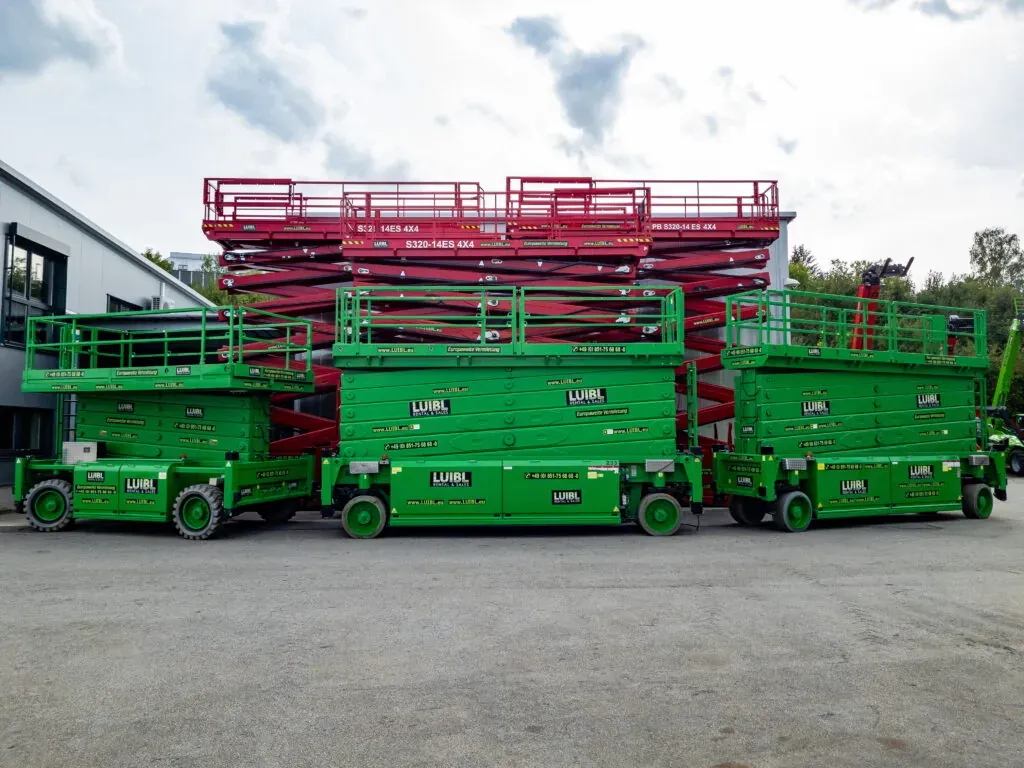
Fleet boost: 32 m PB scissor lifts for Luibl

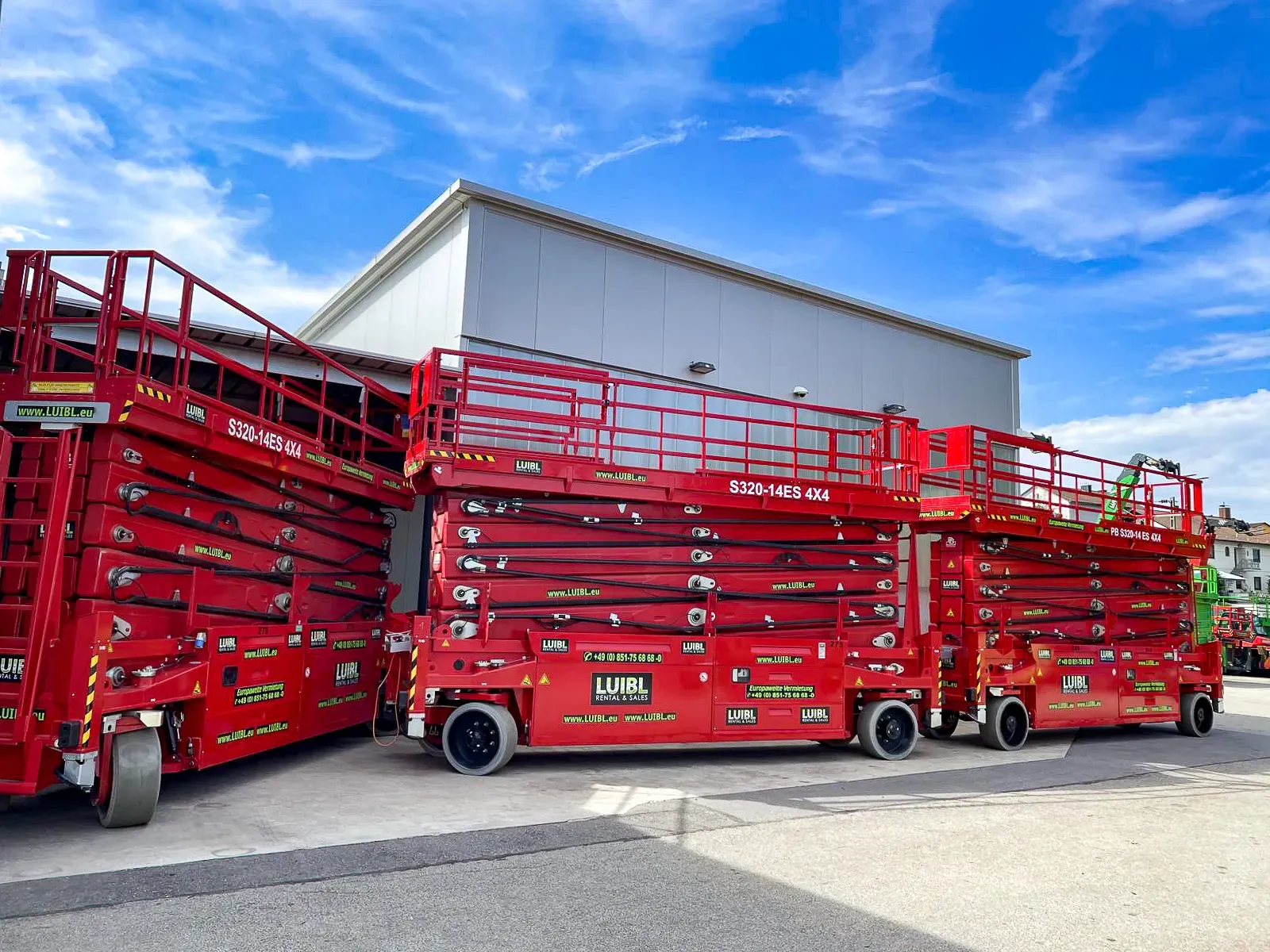
Bavarian deal: Passau and Oberbechingen. Several 32 m PB high-rack aerial work platforms for Luibl. The Bavarian specialist equipment rental company recently bought a large number of HAB high-rack scissor lifts from Kronau in Baden-Wuerttemberg. Now Luibl is following up directly with 32 m high-rack aerial work platforms of the PB S320-14ES type from Oberbechingen/Bachhagel in Bavarian Swabia. "The central lubrication and the recently revised PB digiConnect convinced Luibl," says PB area sales manager Kristijan Ivankovic proudly. And these are not the first PB platforms of this calibre for Luibl: Ivankovic and Luibl owner Karl Bauer had already agreed in 2021 on several 32 m high-rack platforms of the PB S320-14ES 4x4 type. They were delivered from Q4 2021 to Q2 2022. The scissor lifts have already been used on high-rack projects in Austria and Czechia and have successfully proven their class there. The list of strengths of the 32 m PB S320-14ES 4x4 machines is impressive: - 4-wheel drive - 750 kg load capacity - spacious platform of max. 8.40 m Together with the PB design team, the required transport height was also reduced to under 3.20 m. Another decisive reason to choose PB again was the Europe-wide after-sales support combined with the in-house developed PB digiConnect telematics system. It allows most faults to be diagnosed remotely without any problems. "So far we have received great after-sales support," says Karl Bauer, describing his experience after the first jobs. Alongside the rental of classic aerial work platforms, forklifts and telehandlers, Luibl Rental & Sales has focused on the Europe-wide rental of specialist equipment. Well over 100 nearly new large and specialist machines are now available for rent. From the 39 m Magni telehandler and the new 35 m Manitou roto telehandler to 57 m Big Booms from Genie, everything today's large projects require is ready. For large scissor lifts, customers can choose between top machines from PB, HAB, Holland Lift and Magni with 22 m, 26 m, 28 m, 32 m, 33 m and 34 metres of working height.

Read more
Großer grüner Gabelstapler mit 18 t Tragfähigkeit auf dem Betriebsgelände

Heavyweight: 18-tonne Kalmar for Luibl

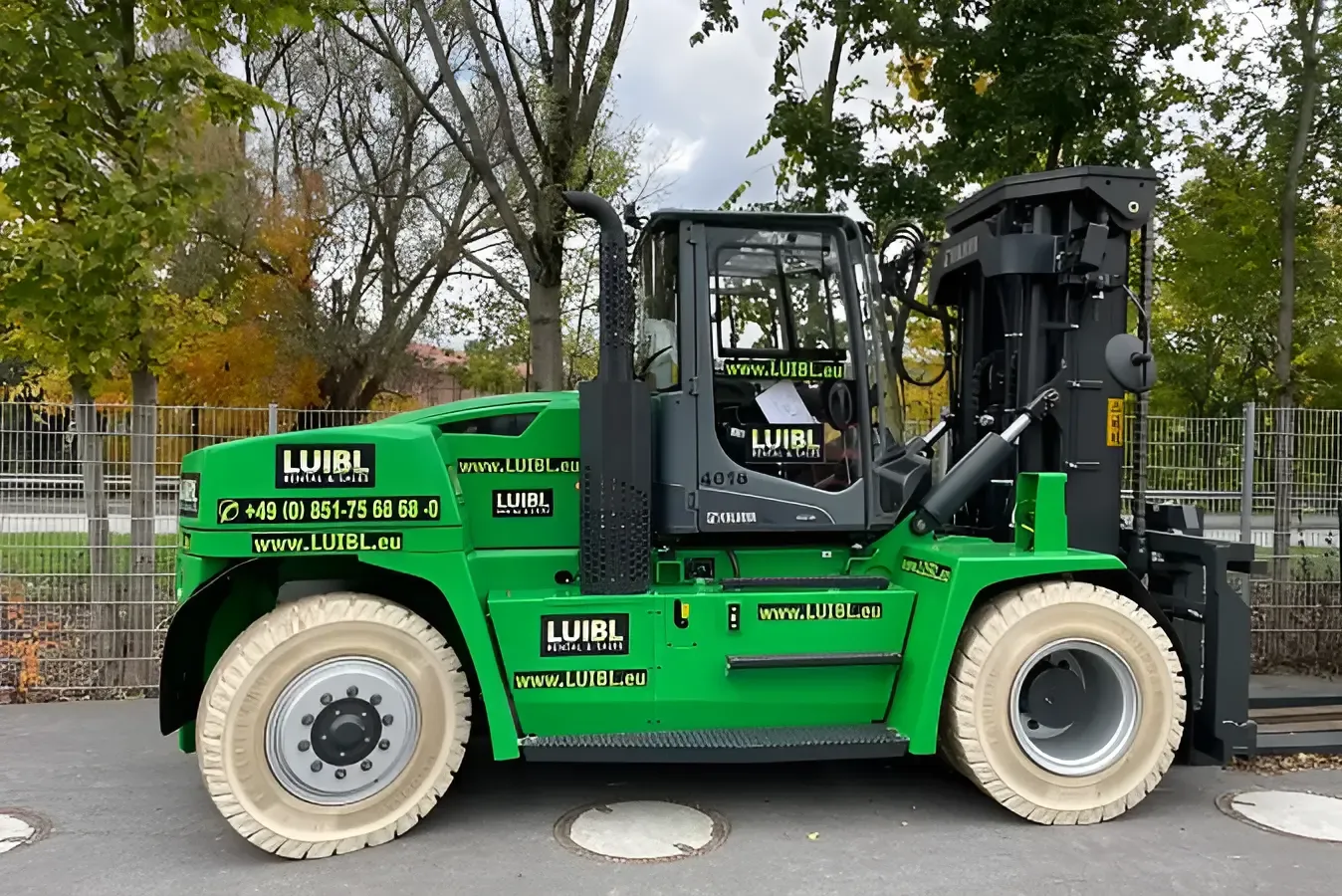
We are expanding our rental offer with the 18-tonne heavy-duty forklift from Kalmar. The machine has a Stage V engine and non-marking tyres. Heavyweight: we are also adding to our forklift range with an 18-tonne heavy-duty forklift from Kalmar. The Kalmar DCG 180-6T stands out for its high load capacity of 18,000 kg at a 600 mm load centre and for its very compact wheelbase of 3,250 mm. Thanks to this short wheelbase, the 18-tonne forklift is even more manoeuvrable than the 12-tonne Kalmar DCG 120-12. These compact dimensions make the Kalmar DCG 180-6T the ideal helper for industrial and machinery relocations within industrial plants. For these special jobs, rental customers can make full use of the 18-tonne load capacity, including non-marking Trelleborg SE tyres. Especially on such complex rental jobs, the further advantages of the Kalmar forklift become clear. Also worth highlighting is the excellent visibility from the EGO cab without an A-pillar and with an integrated multifunction console. The heavy-duty forklift is also equipped with a 160 kW Stage V Volvo engine including a particulate filter - high-end quality for rent. Further highlights are the fork positioner including side shift and the 4.50 m triplex mast, which allows a compact overall height of only 3.13 m. Another special feature is the Terminal-West quick-change system for easy fork changes. Luibl has forks of 2.40 m and 2.60 m length, which are ideal for lifting shipping containers. We deliver the heavy-duty forklift throughout Slovakia with our own special vehicles. This ensures reliable and safe delivery.

Read more
Keyaccount Manager Simon Rath und Karl Bauer von Luibl Rental mit Manitour MRT 3060

Mega deal: 80 Manitou machines for Luibl

Major purchase by Luibl from the French manufacturer, including the Manitou flagship MRT 3570 - a roto telehandler with 35 m height and 7 tonnes load capacity. The rental company Luibl Rental & Sales made substantial purchases from [Manitou](https://www.luibl.eu/manitou/) for 2022 and is expanding its rental fleet by 80 Manitou machines. With this major investment of several million €, Luibl aims to offer an even more extensive rental range and provide customers with modern construction machinery and telehandlers from a leading manufacturer. The order, already concluded in the summer, includes almost the entire range of aerial work platforms, a batch of modern fixed telehandlers of the MT series including new models and, finally, the new futuristic MRT telehandler models. In the aerial work platform segment, the order covers platforms from 12 m to 28 m. It includes electric articulating boom lifts from 12 m to 20 m, including the new rough-terrain battery articulating boom lift 200 ATJ E. For industrial use, further electric articulating boom lifts 120 AETJ-C 3D, 150 AETJ-C 3D and 170 AETJ-L 3D are being acquired, which offer users a high level of comfort on rental jobs thanks to the 3D basket jib. In addition, diesel articulating boom lifts from 16 m to 20 m with the models 160 ATJ, 160 ATJ+ with 408 kg load capacity, 180 ATJ and 200 ATJ. The diesel articulating boom lifts are perfect for rentals where the advantages of Manitou articulating boom lifts matter. These are four-wheel steering and continuous rotation, which set these platforms apart from those of other manufacturers. The modern Kubota Stage V engine underlines both companies' technological standards for drive technology. The order also includes the telescopic boom lifts 220TJ+ and 280TJ, which in turn score with four-wheel steering and high load capacity. Some of the machines were ordered with non-marking tyres. To meet the highest quality standards for fixed rental telehandlers, we invested in numerous Manitou telehandlers. Here Luibl is expanding its rental range with the following machines: compact telehandlers with 2 and 2.5 tonnes load capacity MT 420 and MT 625, the new innovative model MT 930 with 3 tonnes load capacity, and the classics Manitou MT 1440 and MT 1840 with 4 tonnes load capacity. Luibl owner Karl Bauer, together with key account manager Simon Rath, inspected the newly developed Manitou MT 930 telehandler at the Platformer Days and was impressed by the compact dimensions and respectable performance data of the telehandler. Beyond that, Luibl boss Karl Bauer values the high reliability and low downtime of Manitou telehandlers. Substantial purchases were also made in the roto telehandler segment to complement the packages from competitor Magni already integrated into the fleet. Customers should be free to choose which innovative construction machines they want to use for their projects when making an enquiry. The expansion in the roto telehandler segment covers almost all new Manitou models: Manitou MRT 1845 Vision with 18 m lift height and 4.5 tonnes load capacity as successor to the MRT 1840 easy, the new Vision+ models MRT 2260, MRT 2660, MRT 3060 now with 6 tonnes instead of 5 tonnes load capacity and 22 m, 26 m and 30 m lift height respectively. Finally, the showpiece acquired was the new largest Manitou telehandler MRT 3570 Vision Plus with max. 35 m lift height and 7 tonnes load capacity. The new models thus reach 35 m lift height just like competitor Merlo. The only missing model is the heavy-duty roto MRT 2570. Here Luibl Rental & Sales only recently invested in several Magni RTH 7.26. The new additions will be available with all accessories such as buckets, load hooks, long load hooks, winches for use as a crane, lattice jib winches, folding work baskets and much more. New in the rental range, Luibl can then offer a work basket that folds out to 6 m for special applications. This gives the operator a working area as wide as on a scissor lift with the reach of a telehandler. In addition, all telehandlers are fitted as standard with a trailer pin and radio remote control for operating the lift functions of the telehandler and the rotation of the superstructure, for maximum operator convenience in rental. The expansion of the state-of-the-art Luibl rental fleet is thus being driven forward. According to Karl Bauer, Luibl operates the most modern special equipment fleet in Europe with dozens of large machines, most of which are only 1-2 years old. In addition to numerous other telehandlers from Manitou, Merlo and Magni with lift heights of up to 39 metres, Luibl also carries many aerial work platforms and special forklifts in its range. End customers and re-renters get a wide variety of exceptional machines at Luibl, such as the 48 m and 57 m telescopic boom lifts Genie SX-150 and Genie SX-180, diesel scissor lifts up to 34 m from Holland Lift and JLG Liftlux, or high-rack scissor lifts from 22 m to 33 m from PB and HAB. With its own fleet of trucks and low-loaders, delivery of the special equipment throughout Europe is ensured. Here too, investments were made for 2022. You can read about the other special additions to the Luibl rental fleet in the coming weeks on Vertikal.net and in our news section.

Read more
39m Magni Teleskoplader Magni RTH 6.39SH

Luibl orders 15 more large Magni machines with lift heights of up to 39 metres

Luibl Rental & Sales has ordered 15 more telehandlers from Magni – including the 39-metre model. The Passau-based rental company Luibl Rental & Sales has invested in 15 more Magni telehandlers with lift heights of up to 39 metres. The order placed with the Italian telehandler manufacturer includes the models Magni RTH 5.21, RTH 6.21, RTH 6.25 , RTH 7.26 , RTH 6.30 and RTH 6.39. Most of the machines have already been delivered and are already in rental use across Europe. The roto telehandlers were delivered in typical Luibl green, some also in classic Magni red. This expansion of the rental fleet is intended to contribute to the further growth of the Luibl group and to increase availability and coverage in the fleet. All telehandlers are again equipped with Twin Energy preparation and Stage V engines. The Magni Twin Energy Station allows all lifting functions to be carried out electrically, so the machines work as electric telehandlers without local emissions. ## Magni RTH 6.39 The showpiece of the order, a Magni RTH 6.39, was delivered from Italy to Passau last week. "With a lift height of 39 metres, an outreach of 27 metres and a load capacity of up to six tonnes, it gives our customers a major advantage when handling demanding lifting tasks," sums up owner Karl Bauer. In addition to numerous other Magni telehandlers with lift heights of up to 39 metres, Luibl also stocks roto telehandlers from Manitou and Merlo as well as a broad range of special machines – for end customers and for re-renters

Read more
57m Teleskopbühnen Genie SX-180

3x 57 m telescopic boom lifts and more large Genie machines for Luibl

Luibl Rental & Sales has expanded its large-machine fleet with additional aerial work platforms from Genie. The highlights of the order are three more 57 m Genie SX-180 telescopic boom lifts for the Luibl fleet. To broaden the range and availability in the special equipment segment, SX-150 units with 48 metres of working height and ZX-135 units with 43 m of working height were also ordered. Luibl thus offers numerous aerial work platforms from the leading brands with a height of 40 metres or more for rent. These are not only used in Bavaria or neighbouring Austria, but are available to rental customers and rental partners for projects throughout Europe. Special requirements, such as a diesel particulate filter, can also be met in rental thanks to Stage V engines. also included several telescopic boom lifts from the new heavy-duty XC series. The Genie S-45XC, Genie S-65XC and Genie S-85XC models were ordered to meet the growing demands in rental. To meet demand for machines with electric or hybrid drives, Luibl has also acquired the hybrid models Genie Z45FE and Genie Z60FE, which work on site without exhaust emissions in electric mode. To expand the rental fleet, various scissor lifts were also ordered for rental. Back to the 57 m Genie SX-180 telescopic aerial work platforms: with more than 24 m of outreach, it offers performance similar to the JLG 1850SJP with more compact transport dimensions. With 340 kg of unrestricted platform capacity, the operator can take enough material for assembly work. Luibl Rental & Sales is always a reliable supplier that delivers high-quality machines at a favourable price. With its own low-loader fleet, delivery of the special machines throughout Europe is ensured.

Read more
33m Elektro Scherenbühne

Expansion of the special equipment fleet with scissor lifts from 28 to 32 metres

Half a dozen tall scissors: Luibl Rental & Sales from Passau, the city of three rivers, has bought a larger package of scissor lifts from the German manufacturer HAB. It comprises a total of six high-rack and rough-terrain scissor lifts with working heights between 28 and 32 metres. To leave no marks in industrial buildings and large plants, all machines are fitted with non-marking tyres. "The 28 and 32 metre high-rack scissors have all-wheel drive and all-wheel steering for maximum manoeuvrability in narrow high-bay warehouses," explains Andreas Becker, Sales Manager at HAB Arbeitsbuehnen. Luibl has ordered the rough-terrain 28 metre scissor lifts both with electric drive and all-wheel steering and in a diesel version with a modern Hatz engine meeting the Stage V emission standard. Delivery will take place next year. The first two machines of the package to be delivered, two 28 metre electric high-rack scissor lifts, have already arrived. Luibl Rental & Sales was founded in 2013 by Karl Bauer Junior and Senior together. The company has since grown strongly and, in addition to hundreds of conventional aerial work platform types, operates a large fleet of special equipment with electric and diesel scissor lifts up to 34 metres working height, telescopic boom lifts up to 57 metres, roto telehandlers up to 35 metres and forklifts up to 16 tonnes. To cope with further growth, the company was able - "fortunately", as it says - to acquire the neighbouring haulage company site in Passau. The rental machines are delivered by the company's own low-loader fleet.

Read more
Blaue Teleskopbühne mit 28 m Arbeitshöhe auf dem Betriebsgelände

Heavy-duty telescopic boom lift 28 metres - Genie S-85 XC arrives in the fleet on St Nicholas Day

On St Nicholas Day we welcomed another addition to our rental fleet: a further telescopic boom lift from the new Genie XC series. With a basket capacity of up to 454 kg, completely new areas of application open up for our rental customers. With this telescopic boom lift you rent top quality and additional features. Thanks to modern computer control, the telescopic boom lift can handle ground slopes of up to 7 degrees with a restricted working envelope. Our telescopic boom lift rental keeps a wide range of different heavy-duty Genie telescopic boom lifts ready for special applications. Whether in steel construction, concrete construction or the chemical industry - with our rental machines you always have the ideal solution. For use in industrial halls, the machine is equipped with non-marking tyres and a Stage V engine with a particulate filter.

Read more
Magni Teleskoplader mieten

Magni telehandler package for Luibl

The rental company Luibl Rental & Sales, headquartered in Passau, has expanded its roto telehandler fleet with six more Magni telehandlers between 21 m and 30 m. The order placed with the Italian telehandler manufacturer comprises the models Magni RTH 5.21 S, RTH 6.25 SH, RTH 7.26 SH and RTH 6.30 SH. The machines offer lift heights between 21 m and 30 m, an outreach of up to 26 metres and load capacities of 5 to 7 tonnes. All the Magni telehandlers ordered are equipped with modern Stage V engines and therefore have a built-in particulate filter. This is particularly important for rentals in Switzerland in order to meet the emission requirements for rental machines there, because in Switzerland no machines may be rented without a particulate filter, whether aerial work platform, forklift or telehandler. In addition, all telehandlers are prepared for installation of the Magni Twin-Energy station. With the Twin-Energy station, all lifting functions can be performed electrically, so the machines work on site without exhaust emissions as an "electric telehandler". Of course, the telehandlers can be rented with all attachments and used, for example, with a winch in crane mode or with a work basket that unfolds to up to 4 m as an aerial work platform with a high load capacity. The first telehandler from the Magni package went directly to a customer with special requirements at the end of last year: the customer wanted to rent a rotating telehandler from Luibl with white tyres and a 5,000 kg load capacity, with which all lifting movements could also be performed electrically. The choice fell on a Magni RTH 5.21S with Twin-Energy pack to handle the lifting tasks. Expanding the rental fleet with modern Magni telehandlers helps Luibl meet customers' expectations of new, high-quality rental machines. In addition to numerous other Magni telehandlers with lift heights of up to 35 metres, Luibl also stocks roto telehandlers from competitors Manitou and Merlo. Customers therefore have a free choice of which top brand of roto telehandler to rent. Luibl also offers end customers and rental resellers a wide range of special machines, whether a 48 m or 57 m telescopic boom lift, diesel scissor lifts up to 34 m or high-rack scissor lifts with 28 m and 33 m. With Luibl, business partners always have a reliable supplier at their side that delivers high-quality machines at an attractive price. Its own low-loader fleet ensures Europe-wide delivery of the special machines.

Read more
Magni RTH 5.21

21 m Magni telehandler with Stage V engine and electric drive

The Magni telehandler complies with the Stage V emission standard and is alternatively available as a solution with no local emissions using the Twin Energy Station. Thanks to the large touchscreen, our Magni telehandlers for rent are extremely popular with rental customers. This Magni telehandler for rent meets the Stage V emission standard with a 4-cylinder Deutz engine. The built-in particulate filter reduces soot emissions. With the Magni TWIN-ENERGY system, the lifting functions can also be carried out fully electrically - with no exhaust emissions on site, making it suitable for indoor areas and industrial halls. With a maximum load capacity of 5,000 kg, a maximum lift height of almost 21 metres and an outreach of over 17 m, combined with numerous attachments, users get a robust telehandler with a large working area. ## Optional Twin Energy system with no exhaust emissions on site The Twin Energy system is the ideal solution for using the rental machine with no local emissions in enclosed areas such as industrial halls or production facilities. The innovative system is powered from the mains via an external power source (380 V / 32 A), so this machine can be used in all industrial buildings. Contact us now for an attractive quote for this roto telehandler and other telescopic machines.

Read more
LUIBL Rental & Sales

Luibl Rental & Sales - your partner for aerial work platforms, telehandlers and forklifts

With Luibl Rental & Sales you have more time for other sites. The full-service provider makes working at any height easier for its B2B customers with an online rental service for aerial work platforms, telehandlers and forklifts. The entire range of machines and special equipment can be rented flexibly on a weekly, monthly or annual basis, with delivery throughout Slovakia. On request, you also benefit from a prompt delivery service. Through simple rental with precise delivery, Luibl Rental & Sales supports smooth work on schedule. The service is backed by expert rental specialists who provide customers with free advice. ## A comprehensive rental portfolio of the highest quality Aerial work platforms, telehandlers, forklifts and special equipment meet the highest quality standards for use across all industries. The Luibl Rental & Sales portfolio provides a wide range of work equipment for individual purposes in many sectors. A variety of aerial work platform types with heights of up to 58 m delivers the flexibility to meet requirements of every kind. Among the many lifts you will find, for example, the popular scissor lifts, which are regularly used for work in the 6 - 34 m range. They are valued above all in automotive plants and in facade and tunnel construction thanks to their versatility. Telescopic boom lifts with heights of 16 - 58 m are versatile helpers in shell construction and on large projects thanks to their rough-terrain capability. The company's articulating boom lifts are suited to assembly, installation and maintenance. Their long outreach saves frequent repositioning around corners and obstacles. If customers need more flexibility on their project, telehandlers are the all-rounders that make projects of any size a success. Thanks to their flexible use, roto, fixed and rough-terrain telehandlers master even demanding tasks with impressive load capacity and lift height. The roto telehandlers include rotating machines from the renowned brands Manitou, Magni, Merlo and Genie, while their relatives, the fixed telehandlers, deliver high load capacity and lift heights of up to 18 m. For heavy loads in steel, concrete or hall construction, heavy-duty telehandlers with a load capacity of up to 13 t are the right choice. Alongside aerial work platforms and telehandlers, Luibl Rental & Sales offers a selection of forklifts with electric or diesel drive for industrial or rough-terrain use. They are available in the online rental catalogue with different drive types, tyres and sizes. For use on site, in the warehouse or in production halls, customers can rely on the company's forklifts. Indoor work can be done with an electric forklift with no exhaust emissions at the point of use, or with an LPG forklift with reduced emissions - both operate quietly. To overcome obstacles in plant construction or at events and to work safely on uneven ground, rough-terrain forklifts are a good choice: they impress with a powerful diesel drive and high ground clearance. ## Delivery throughout Slovakia - for punctual and safe work at height As an international rental service, Luibl Rental & Sales also provides work machines on site. When delivery is required, the company's own low-loader fleet steps in and handles short-notice requests promptly and reliably. Luibl Rental & Sales delivers reliable work machines and special equipment throughout Slovakia. Dispatch spares no effort to deliver the machine precisely to the required location. Thanks to agile logistics and a flexible offer, it does not matter what the weather is like or where you are - the company's own low-loader fleet is ready for every job. ## Competitive rental rates for long rental periods too - flexibly to project success An individual quote for construction machinery rental is prepared according to your requirements for rental period, application and transport. Luibl Rental & Sales gives you a competitive edge through attractive rental rates and expert advice. All services follow the principle of flexibility to make your work as efficient as possible. The rental portfolio also proves itself in long-term use: whether for weeks, months or years - long-term rental is a flexible alternative to leasing. High-quality equipment ensures continuous operation for the periods you need. For business customers who prefer to buy, Luibl Rental & Sales offers new and used machines from leading brands at excellent prices. Whether hire purchase or leasing - together with Luibl Rental & Sales GmbH you will find the right financing solution for every company. Luibl Rental & Sales GmbH specialises in the rental and sale of aerial work platforms, telehandlers, forklifts, construction machinery and special equipment. In addition, customers can obtain new and used machines at a fair price. Luibl Rental & Sales offers more than high-quality products from an extensive rental portfolio. The products include aerial work platforms, telehandlers, forklifts, construction machinery and special equipment. The company stands out with individual advice from experienced specialists and reliable delivery to the required location.

Read more
Scherenbühne mit 34 m Arbeitshöhe

New in the rental fleet - 34 m diesel scissor lift with non-marking tyres

Luibl Rental & Sales welcomes another 34-metre scissor lift to its rental fleet: the latest model from Holland Lift, the HL340D30. With a working height of 34 m and a load capacity of 1,000 kg, it represents the top of the diesel scissor lift range. Luibl has every kind of diesel scissor lift in its rental fleet and is well equipped for large projects where several of these giant scissor lifts are needed. The 34 m scissor lifts are complemented by 28 m scissor lifts, which you can also rent from us in large numbers. With our machines you rent added value, for example non-marking tyres or new engine technologies. Whether for facade construction or other applications, with a 9.60 m platform length combined with a 1,000 kg load capacity you rent the ideal aerial work platform for transporting materials. This 34-metre platform is going straight to a special assignment in Villach, where Infineon's new plant is being built with several of these large scissor lifts. Request a quote for one of our 34 m scissor lifts now and benefit from top service and a large stock of rental machines.

Read more