
Aerial work platform and construction machinery rental in Zilina
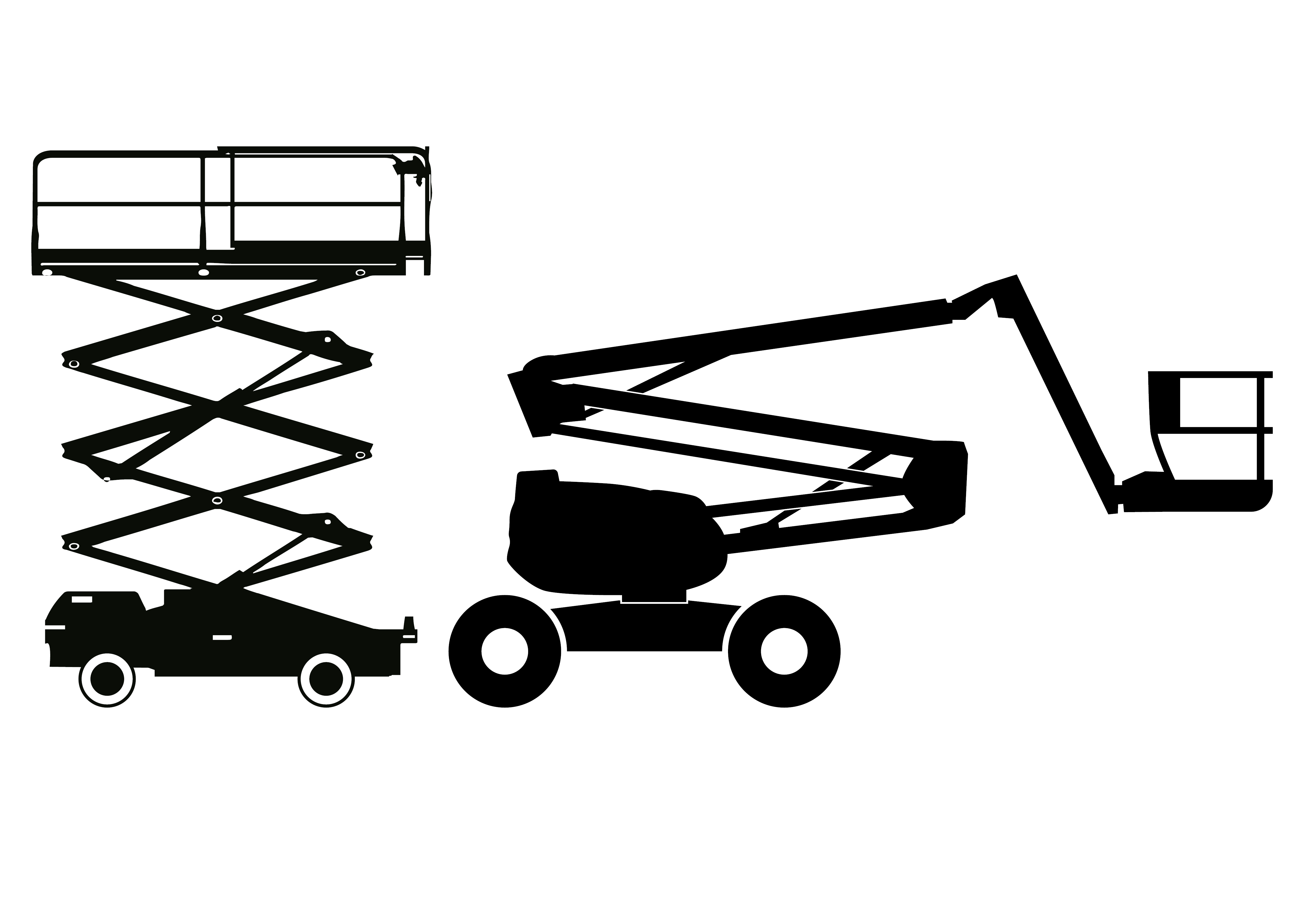
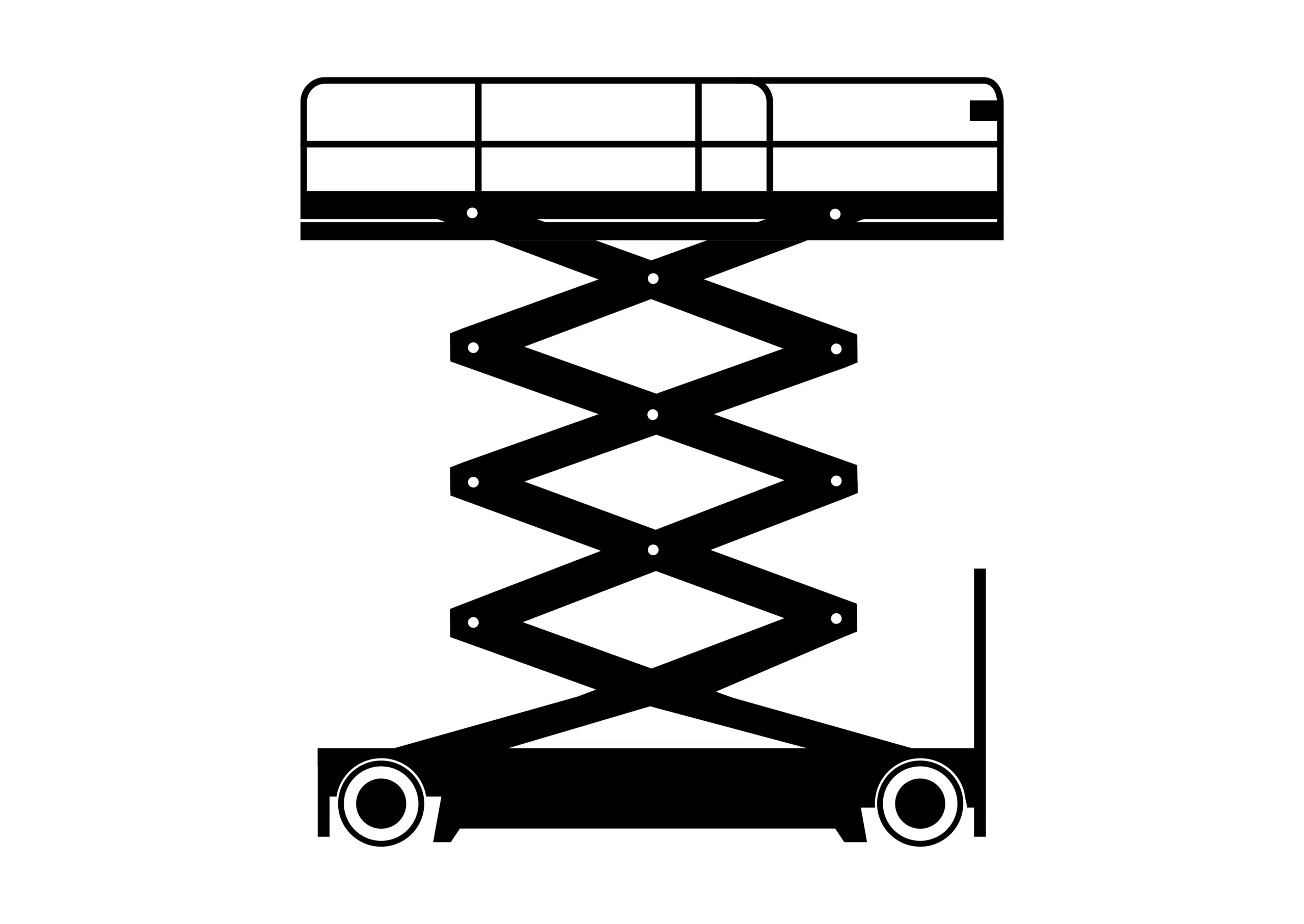
In Zilina, aerial work platforms and construction machinery are mostly needed where production does not stop: in manufacturing and assembly halls that keep running while conversion, repair or retrofitting goes on next to them. The city of around 82,000 inhabitants is home to a car plant and a dense supplier cluster, plus mechanical engineering and metalworking in the Vah valley. For the fleet this means: drive without local emissions, non-marking tyres, compact dimensions — and scheduling geared to cycle times and plant shutdowns, not construction schedules.
Why only electric drive is an option in the factory hall
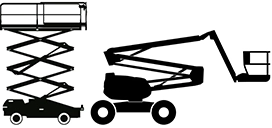
In an occupied hall, combustion engines are not an option. Exhaust fumes pollute the hall air and ventilation system, and in areas with paint shops, electronics assembly or test benches they are ruled out. Electric scissor lifts therefore cover most jobs: 6.30 to 33.00 m working height at 227 to 1,000 kg basket load. The compact models fit through hall doors and between rows of equipment, the large ones from 18 m reach roof trusses and service routes.
Tyres are just as important: on coated industrial floors hard tyres leave permanent marks, so non-marking tyres should be explicitly agreed in the enquiry — as should the permissible floor load, which is lower over channels and pits. For spot maintenance in areas in use — lighting, sensors, cable trays — mast lifts with 10.00 to 12.65 m are the simplest solution.
Over conveyor systems: installation and conversion during plant shutdown
The difficult tasks are those where something sits under the work position that cannot be moved: conveyor belts, overhead conveyors, skid systems, robot cells, press lines. A scissor lift needs the area directly beneath it — and that is occupied. This is where you use articulating boom lifts, which reach over the obstacle and back down into the working position. The electric version works with 10.89 to 28.00 m and 150 to 280 kg and is suitable for halls; if that is not enough, the range goes up to 48.15 m.
The second factor is time. Conversions take place at shift changes, at weekends or during the plant holidays, and the window is fixed — so the machines belong on site before the shutdown starts, not scheduled into the window itself. For hall structures and outdoor installations with greater height, telescopic boom lifts with 14.00 to 56.90 m are available, and for narrow set-up areas spider lifts.
The rental fleet in figures
| Class | Working height | Platform capacity |
|---|---|---|
| Electric scissor lifts | 6.30 – 33.00 m | 227 – 1,000 kg |
| Diesel scissor lifts | 9.70 – 34.00 m | 363 – 1,134 kg |
| High-rack scissor lifts | 18.50 – 33.00 m | 450 – 1,000 kg |
| Articulating boom lifts | 10.89 – 48.15 m | 150 – 450 kg |
| Telescopic boom lifts | 14.00 – 56.90 m | 227 – 454 kg |
| Mast lifts | 10.00 – 12.65 m | 200 kg |
| Spider lifts | 13.00 – 39.50 m | 200 – 400 kg |
Outside the hall — yards, ancillary buildings, outdoor storage — diesel scissor lifts with four-wheel drive are the variant with higher load capacity.
Material handling in the plant and the supplier park
When equipment is converted, the material flow is often the bottleneck, not the working height. Telehandlers lift and place assemblies without setting up a crane: fixed models with 4.30 to 18.80 m and 1.25 to 25 t, roto models with 15.42 to 38.90 m for all-round work. Indoors the same drive rule applies as for platforms — for this there are electric telehandlers with 5.85 to 30.00 m.
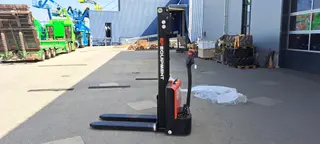
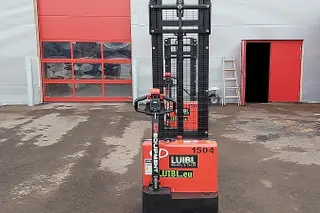
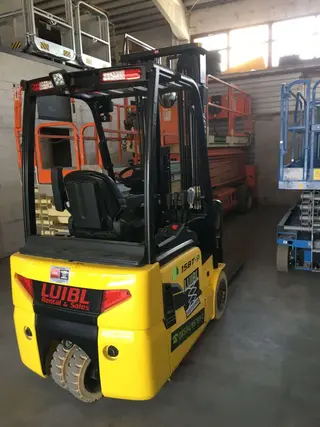
In the storage and dispatch areas of supplier companies, forklifts from 3 to 16 t complete the range, as electric forklifts for indoor use. For extensions and service lines, excavators from 1.8 to 30 t are added.
Inspection requirements for work during running plant operations
Anyone operating an aerial work platform in Slovakia works under a stricter regime than in Germany. Decree No. 508/2009 Coll. of the Slovak Ministry of Labour classifies motor-driven mobile elevating work platforms with a lift height of more than 1.5 m as group A lifting technical equipment and therefore as designated technical equipment. Official tests apply, repeated as repeated official tests, along with specific documentation duties and formal qualification requirements for operating personnel. In addition there are Government Regulation No. 392/2006 Coll. on the use of work equipment, the occupational safety act No. 124/2006 Coll. and STN EN 280.
On a plant site this has a consequence beyond paperwork: contractors working during running operations must disclose their documents to the plant — the machine's inspection certificate, qualification and instruction of the operators, and the risk assessment for the specific workplace. We provide the machine documents; the operator's duties lie with you. In addition, a visual and function check is required before every shift — it cannot be passed on either to the rental company or to the plant operator.
Delivery at the D1/D3 motorway junction
Zilina lies where the D1 and D3 meet, in the Vah valley between the Mala Fatra and the Kysuce Highlands. For delivery this is convenient: heavy transports reach the industrial sites in the area without long stretches of country road, and moving between supplier sites in the valley is done in short stages. If you work at several plants in the same supply chain, the machine moves in a circuit instead of separate rentals per site.
The topography still requires attention. Plant access roads and ramps in hilly terrain have gradients, and the permissible travel and set-up inclination of an aerial work platform is smaller than you might expect: on sloping surfaces you do not work, you only travel, and even then only within the manufacturer's specifications. Check the access gradient and manoeuvring space in advance, especially for halls with a lowered docking level. For longer conversion projects we charge long-term rental rates; we set the dates with your shift planning.
Before you enquire, it is worth looking at the designs: under Aerial work platform rental you will find all platform types, from scissor lifts to truck-mounted platforms, with their strengths, typical applications and the obligations for operators.
