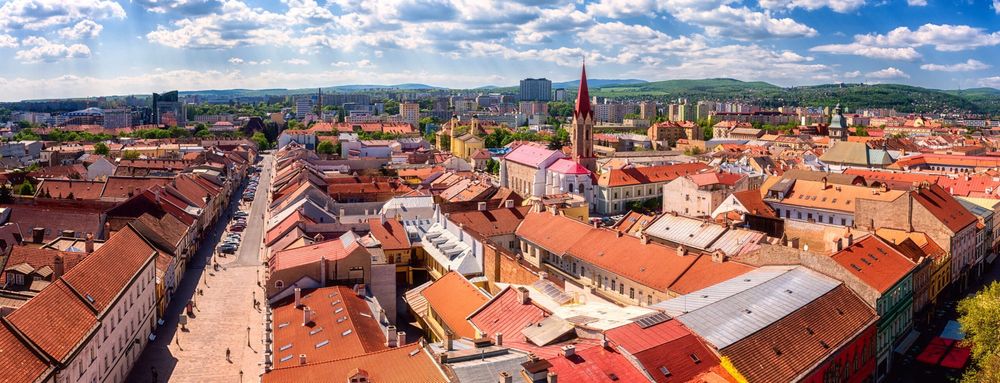
Aerial work platform and construction machinery rental in Kosice
If you rent aerial work platforms and construction machinery in Kosice, you plan two things differently than on a typical project: the machine's load capacity and the logistics. With around 230,000 inhabitants, Kosice is Slovakia's second-largest city and the industrial centre of the east — steelworks and metal processing, plant construction, IT services and logistics up to the broad-gauge line. Jobs here call for high platform capacities and robust chassis more often than average, and delivery to the east of the country needs to be planned early. Both influence the machine class and rental period.
When platform capacity matters more than working height
In steelworks and plant construction, the choice of machine is rarely decided by height but by the weight that has to go up. Maintenance of furnace peripherals, pipelines, crane runways and dust extraction systems means: two fitters, tools, spare parts, often a hoist in the basket. Then 200 or 300 kg of platform capacity is not enough.
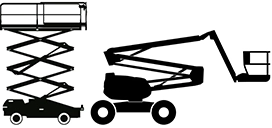
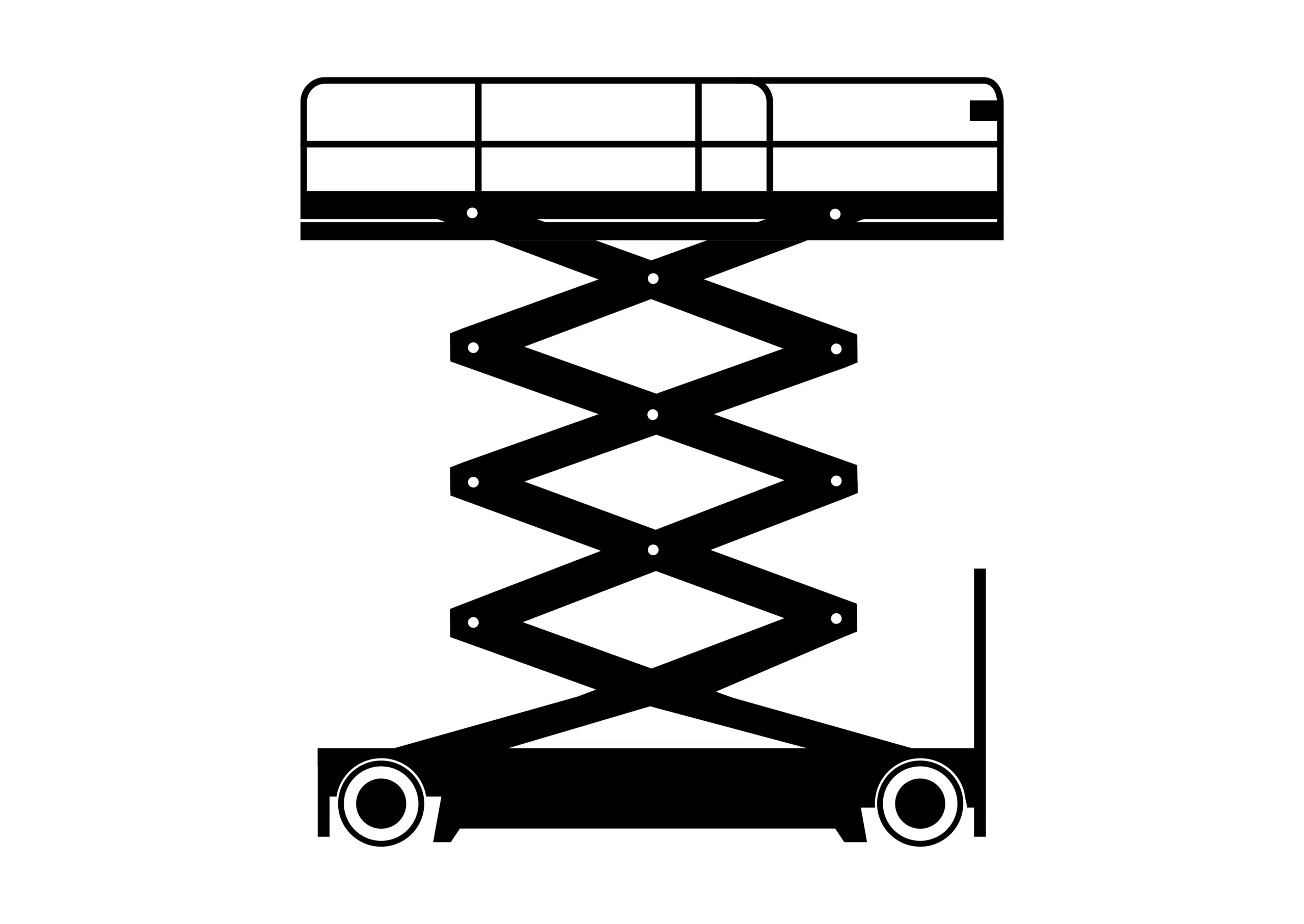
The highest-capacity class is the diesel scissor lifts with 9.70 to 34.00 m working height and 363 to 1,134 kg platform capacity — 1,134 kg is the highest platform capacity in the range, so assemblies go up in one lift instead of in partial loads. For enclosed production halls without exhaust fumes, electric scissor lifts with 6.30 to 33.00 m and up to 1,000 kg sit just below. If the machine cannot stand beneath the work area because plant and pipe bridges are in the way, articulating boom lifts with 10.89 to 48.15 m take over. On chimneys and tall hall structures, telescopic boom lifts with 14.00 to 56.90 m reach the highest.
Plant sites and the broad-gauge transhipment terminal
An industrial site in Kosice is not a finished hall. Between the buildings are traffic areas that are compacted but not paved throughout, plus tracks, cable ducts and varying ground bearing capacity. For outdoor plant and pipe bridges you therefore need four-wheel-drive chassis with coarse tyres and an oscillating axle — the diesel classes are designed for this. Where only low point loads are permitted, spider lifts with 13.00 to 39.50 m are the alternative: low ground pressure via the tracks, set up on fold-out outriggers.
East of the city the Russian broad gauge ends, and ore and bulk goods are transhipped to standard gauge. The same logic applies at transhipment halls, conveyor bridges and belt systems: limited set-up areas between tracks, work above running equipment, reach instead of access. In distribution halls with narrow aisles, high-rack scissor lifts with 18.50 to 33.00 m come into play.
The rental fleet in figures
| Class | Working height | Basket load |
|---|---|---|
| Scissor lifts electric | 6.30 – 33.00 m | 227 – 1,000 kg |
| Scissor lifts diesel | 9.70 – 34.00 m | 363 – 1,134 kg |
| High-rack scissor lifts | 18.50 – 33.00 m | 450 – 1,000 kg |
| Articulating boom lifts | 10.89 – 48.15 m | 150 – 450 kg |
| Telescopic boom lifts | 14.00 – 56.90 m | 227 – 454 kg |
| Mast lifts | 10.00 – 12.65 m | 200 kg |
| Spider lifts | 13.00 – 39.50 m | 200 – 400 kg |
For maintenance in office buildings and data centres — where the city's IT services sector is based — mast lifts with 10.00 to 12.65 m are sufficient.
Material handling: telehandlers, excavators and forklifts
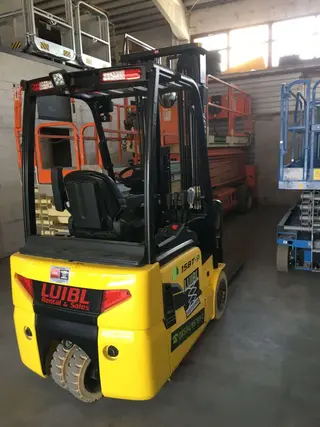
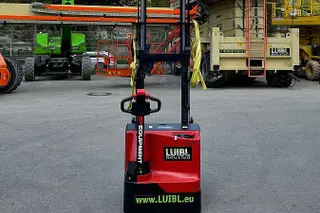
You move heavy material without setting up a crane using telehandlers: fixed models lift 4.30 to 18.80 m at 1.25 to 25 t and at the top end often replace the mobile crane on plant sites, while roto models with 15.42 to 38.90 m rotate 360 degrees from one position when only one load-bearing area is free between plant. Excavators are available from 1.8 t for utility trenches up to 30 t for earthworks and demolition. In the warehouse, forklifts from 3 to 16 t complete the range; for coils and sheet bundles the way leads to the heavy-duty class.
Official tests: the Slovak classification as designated technical equipment
Operator obligations are governed by the law of the country of use — for a plant shutdown in Kosice, that means Slovak law. Under Decree No. 508/2009 Coll. of the Slovak Ministry of Labour, a self-propelled mobile elevating work platform with a lift height of more than 1.5 m is lifting technical equipment of group A and therefore designated technical equipment. This entails official tests and repeated official tests as well as increased requirements for documentation and operator qualification. Czech law has no such classification — anyone managing sites in both countries should not treat the rules as equivalent. In addition, Government Regulation No. 392/2006 Coll. on the use of work equipment and the occupational safety and health Act No. 124/2006 Coll. apply; machine testing follows STN EN 280.
For a heavy-load project this means: every machine comes with a valid test certificate, CE documentation and operating manual, and we keep inspection dates and maintenance history centrally. Risk assessment, operator qualification and instruction remain with the operator on site — clarify the proof of qualification already when planning the shutdown, because several trades work there at the same time.
Delivery to eastern Slovakia: bundling and long-term rental
Kosice lies in the east of Slovakia. Distance is no obstacle, but it changes the calculation: transporting one machine for three days of use is uneconomical, transporting four machines for six weeks of use is not.
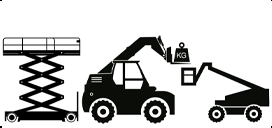
That is why we plan deliveries to eastern Slovakia differently. Wherever possible, we bundle machines for the same project into one trip — platform, telehandler and forklift together, one contact person, one invoice. From several weeks onwards, we charge at long-term rental rates. Plan in a reserve: one additional machine delivered with the others costs less than a separate follow-up delivery over this distance. We coordinate returns and relocations within the plant with your shutdown schedule.
Before you enquire, it is worth looking at the designs: under Aerial work platform rental you will find all platform types, from scissor lifts to truck-mounted platforms, with their strengths, typical applications and the obligations for operators.
